Archive for May 2011
Forthcoming GCLC Lunch Talk – Roundtable on Leniency Programmes

The next lunch talk of the GCLC will be devoted to “Leniency Applications and the European Competition Network: Roundtable discussion on the Interplay between National and EU Procedures“.
It will take place on 27 May 2011 at The Hotel in Brussels.
Our speakers for this promising event are Saari Suurnäkki (DG Competition); Marcos Araujo (Garrigues); Mario Todino (Gianni, Origoni, Grippo & Partner); and Antoine Winckler (Cleary Gottlieb).
The registration form is available here.
Fine Arts in Brussels

In the past few days both Commissioner Almunia and Cecilio Madero, Deputy Director General for Antitrust, have spoken publicly about sanctions for breaches of EU Competition law (see here and here). Both have praised the current EU enforcement system as well as the changes that have been introduced to improve enforcement practice, namely the settlement procedure.
In his speech, Mr. Almunia also made a very welcome announcement. From now on “the Commission will indicate already in the Statement of Objections itself, the elements for the calculation of the fine such as the value of the cartelised sales – which is a critical factor – but also, for example, an indication of the gravity and issues of recidivism”. I see this as a great development, and one for which the European Commission must be congratulated.
But there are still a few issues which, in my view, should also be reconsidered by the Commission. Some opinions and suggestions in this regard are developed in an article I´m specially proud of, titled “Fine Arts in Brussels, Punishment and Settlement of Cartel Cases under EC Competition Law”. This article was authored by Luis Ortiz Blanco, Angel Givaja and by myself; it was presented by Luis Ortiz Blanco at a conference in Treviso in May 2008 and later published on the book Antitrust, Between EC Law and National Law.
Until now this article had never been available online, so we´ve decided to remedy that and make it available to the readers of this blog. As you will see, the arguments in this article are accompanied by Roman numbers; those numbers refer to paintings which graphically illustrate those ideas.
Here it is:
DG COMP Stakeholder’s Study – A Counter-Survey

In July 2010, DG COMP published the results of a wide-scale stakeholder study (Alfonso commented on this a while ago).
According to the stakeholders study, DG COMP has arguably enforced the competition rules in a satisfactory fashion, both from a substantive and procedural standpoint.
As part of their exam, my students from EDHEC Business School have been requested to assess whether the findings of DG COMP’s stakeholder study are sound. To this end, I have required them to run a counter-stakeholders’ survey, which takes the form of a reduced questionnaire.
I would like to offer our readers the opportunity to help my studs, by filling-in the below questionnaire:
https://spreadsheets.google.com/spreadsheet/viewform?formkey=dHZVVWI0SzNhNUFQUlpsa2NnZWVra1E6MQ (or simply by clicking here)
Please note that it should take you a maximum of 15 minutes to complete this survey. Obviously, all the responses to the survey will remain confidential and will be used for the sole academic purpose of this study. If you have any questions or concerns about completing the questionnaire, you may contact my assistant at dgcompsurvey@edhec.com or eprovost@doct.ulg.ac.be.
Name of assistants/students involved in the research project: Elise Provost; Naruttama Asvamanee;Edouard Augris; Melissa Butarbutar; Guilain Lobut; Anne-Juliette Lepoutre; Sabine Racine; Mariama Sene.
Net neutrality and Antitrust

The European Commissioner for the Digital Agenda, a certain Neelie Kroes, is now in charge of dealing with European policy with regards to net neutrality. This hot issue, which is now her current priority (for her latest speeches on this subject see here and here), is the subject matter of a Commission´s Report she presented to the European Parliament on April 19th.
Net neutrality activists have heavily criticized the Report alleging that it endorses a “wait and see” approach in spite of the identification of alleged instances of blocking or throttling of certain types of traffic. The Report states that the Commission and BEREC are currently investigating those alleged practices and that “[i]n this regard, the Commission reserves its right to assess under Articles 101 and 102 of the TFEU any behaviour related to traffic management that may restrict or distort competition“. One should however note that the Report doesn´t exclude the possibility that an ad hoc regulatory framework might be adopted.
On the other side of the Atlantic the debate on the interface between antitrust and regulation on this same area is also a “trending topic”. Speaking last Thursday before a Subcommittee of the US Congress, the President of the US Federal Communications Commission expressed his views on this debate stating that:
“while critically important, antitrust laws alone would not adequately preserve the freedom and openness of the Internet or provide enough certainty and confidence to drive investment in our innovation future.
(…) antitrust enforcement is expensive to pursue, takes a long time, and kicks in only after damage is done. Especially for start-ups in a fast-moving area like the Internet, that’s not a practical solution”.
He also replied to the Republican´s party proposal to enact specific antitrust laws to regulate internet neutrality:
“Some have suggested that Congress adopt new antitrust laws addressing Internet openness. But that too would be a problematic approach, ill-suited to the fast-changing nature of Internet technology. As the Supreme Court has pointed out, while statutes are hard to change in light of new developments in network technology or markets, expert administrative agencies have flexible processes for dealing with the unexpected and are, accordingly, better suited for handling this particular issue”. (See here for his complete statement).
At first sight, my -rather simple- take is that if there really were a need for intervention (not having devoted time to this issue I wouldn´t dare to express an opinion on this point) antitrust and regulation could play together and should be seen as complements rather than as substitutes (although that´s certainly much easier to say in the EU in light of case law such as Deutsche Telekom than in the EU, where the Supreme Court´s Decision in Trinko enormously complicates antitrust challenges to practices already subject to regulation on the part of the FCC).
This could be an interesting topic a discussion and we haven´t paid much attention to it here. We´d be glad to open the floor to any of our readers who might have some more developed thoughts on it. Anyone?
Competition Parties

We recently received invitations to a new breed of parties. On 4 May, Compass Lexecon was having its “Exclusive Spring Party” (with “drinks and canapés“). Two days later, Crowell & Moring held its “CroMo Party” at Tour and Taxis (with DJ BENNY…).
Unfortunately, I could not attend any of those parties.
Yet, a question arose: what drives business law firms and economic consultancies to organize such summer parties?
In the case of Compass Lexecon, the answer is straightforward. The firm sought to celebrate the launch of Compass Lexecon Europe, following the acquisition of LECG’s EU Competition Policy Group. This party was a classic reception, similar in nature to many other receptions.
The case of Crowell and Moring is more interesting. The flyer and dressing code (“colorful casual”) suggest that CroMo’s party was primarily targeted at young professionals (from Cromo and elsewhere) rather than at partners and clients. No information was provided on drinks, but I suspect they came for free. There was no special thing to celebrate.
So why organize a loss-making party of this kind? Initially, the following reasons came to mind: acquiring information on competing law firms, possibly with the help of liquid substances; increasing busy associates’ procreation rate; assuaging partners’ midlife crisis.
On second thoughts, however, I dismissed most of them in favour of a more conventional explanation which has to do with “branding”. It plays at several levels.
First, with the commoditization of the profession, legal services are increasingly fungible. Clients shop around and competition amongst law firms becomes brutal. To prevail over rivals, law firms seek to be perceived as special. For a number of years now, law firms have organized academic conferences to look bright. Now, they organize parties to look cool, hype and creative.
Second, as stressed by Alfonso a while ago, there is an increasingly pervasive perception amongst students that working in a business law firm is “not cool”. Being an associate in a business law firm involves long working hours, little freedom and virtually no space for leisure and family life. This has dramatic consequences on law firms’ hiring opportunities. And unlike in the 1980s and 1990s, financial compensation no longer does the trick. No wonder why some law firms seek to change their image amongst young lawyers, and arguably organize parties to that end.
Please note that we are interested by pictures, feedback and stories in connection with those parties.
Day off for EU Civil Servants
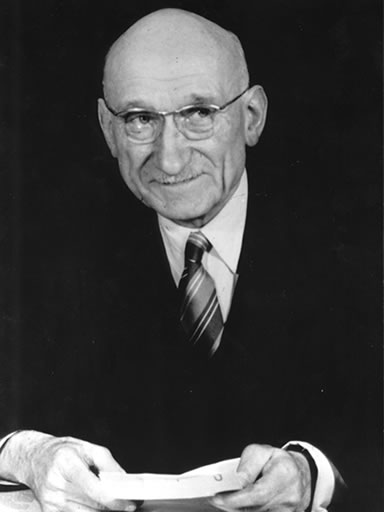
Felt like filing a merger today? Or having a call with a Commission official to discuss a case of common interest?
Unlikely to happen. Today is Europe day or in EU jargon, Schuman day. Most competition civil servants are off duty, chillin’.
What the EU institutions celebrate today is the anniversary of the Schuman declaration of 9 May 1950. In this declaration, R. Schuman, the French Minister of Foreign Affairs (see above picture), invited the governments of France, Germany and other European countries to team up and build a federal state.
The celebration of this event triggers the following remark on my end: as it stands today, the EU is a direct emanation of the Schuman declaration. Yet, 61 years after, and with the exception of competition policy perhaps, we are still far from a federal state with some sort of political existence (nota: I am a convinced federalist). This is true both internally – ever heard anyone saying he was a EU citizen? – and externally – think of the EU’s invisibility in relation to Lybia.
In addition, I am pessimistic on the future, given the increased fragmentation dynamics at the domestic level (think of the nefarious state of Belgian politics) and the somewhat mechanical, ever-enlarging nature of the EU (think of Turkey’s accession demands, backed to a large extent by those who only conceive the EU as a shopping mall).
Weekend readings – Law firms: a less guilded future
I would very much recommend you to take a moment to read an excellent piece published on the latest issue of The Economist. (Thanks to Mark English for calling our attention to it)
At a moment where some are reporting on the pick up on profits and revenues at Big Law, this article from The Economist contains a very insightful analysis of the many challenges that lie ahead for the legal profession, not all of which are cyclical. I tend to agree with a lot of what’s said there (except, maybe, for that last phrase on how “a firm’s only real asset are its partners”…).
Click here to read the online version.
And, although I’m sure most of you have at least heard about it, those interested on further readings on the future of the legal profession should definetely read Susskind’s brilliant book The End of Lawyers.
IMEDIPA Conference on Competition Law and Policy

The 5th International IMEDIPA Conference on Competition Law and Policy will be held in Athens on May 27th -28th under the auspices of the Hellenic Competition Commission and the Competition Authority of Cyprus.
Aside from the venue, this Conference has many other attractives: a very comprehensive program, an impressive line-up of speakers, and a very affordable price (which is quite rare in the world of competition law conferences).
The program and registration information are available here.
(Thanks to George Pedakakis for the pointer!)
Subversive thoughts (1) – Fines, Leniency and the Search for an Optimal Detection Policy

A somewhat heretical idea sprung to mind yesterday. The mainstream will not like it (fortunately disputes with the mainstream are not any longer settled by recourse to bonfires).
(Note to our readers: the mainstream comprises adepts of Chicago School thinking and Public Choice theory. It combats, with caricatural arguments, all attempts to intensify competition enforcement. As if we were subject to Pavlovian conditioning, all too often we lawyers side with the mainstream, thereby failing to remember that competition enforcement is a genuinely good thing).
But let´s get back to this idea: to improve cartelists incentives to report infringements to agencies, why not allocate the entire amount of the fines (or a significant proportion thereof) to the whistle blower?
As long as the ring leader(s) is (are) excluded from a such reward, I see no obvious perverse effects to the proposal.
Surely, it sounds quite immoral to reward financially what is plain and simple betrayal. But on the other hand, it is fair and efficient that society rewards those firms that exhibit the strongest desire to comply with the law.
Also, one cannot rule out that clever firms involved in multiple cartels will coordinate leniency applications so that each participant benefits at least once from the reward (some sort of market sharing on leniency applications). Yet, this hypothesis rests on restrictive factual assumptions. More importantly, given that the fine will likely change from one cartel to the other, cartelists will not withdraw equal benefits from leniency applications. In turn, this will undermine their incentives to join/observe the coordination.
Finally, some could be warry for the EU budget to which competition fines contribute. Again, the objection is not decisive. This is because competition fines do not increase the EU budget but finance it. Technically, they are deducted from MS contributions, who pay less when competition fines are high. The sole and whole issue there is thus distributional: shall we transfer the product of fines from MS to whistle blowers? I am not sure of the answer, but I am incline to believe that competition fines are just a drop in the sea of MS contributions.
Those thoughts came yesterday whilst I was preparing a lecture on public and private enforcement for the LL.M students of the University of Gent (see ppt. below). I am very grateful to Prof. Govaere for her kind invitation.
5 May 2011 – Public and Private Enforcement of Competition Law
Next GCLC Lunch Talk – EU and National Leniency Applications – 27 May

Our next lunch talk will be devoted to the interplay between national and EU leniency procedures.
It will take place on 27 May at The Hotel in Brussels. For this event, we’ll follow a somewhat specific format, with 4 speakers and a roundtable discussion.
Registration form can be downloaded below.


 Chillin'Competition
