Archive for the ‘Case-Law’ Category
Information exchange=cartel?

Many have praised the inclusion of some guidance on exchanges of information within the new EU Guidelines on horizontal agreements. Personally, I agree with those arguing that guidance from the Commission was necessary, and I acknowledge that there are some useful (although arguably insufficient) orientations in the new guidelines. There is nonetheless an issue which may have not been adequately dealt with, and that I believe has very far-reaching implications. I´m referring to the idea of equating information exchanges with cartels (the title of the post probably gave you a hint):
Section 59 of the Guidelines states that “communication of information among competitors may constitute an agreement, a concerted practice, or a decision by an association of undertakings with the object of fixing, in particular, prices or quantities. Those types of information exchanges will normally be considered and fined as cartels“. No qualifications.
Sections 72-74 develop the idea: “Information exchanges betweeen competitors of individualised data regarding intended future prices or quantities should therefore be considered a restriction of competition by object. In addition, private exchanges between competitors of their individualised intentions regarding future prices or quantities would normally be considered and fined as cartels because they generally have the object of fixing prices or quantities”
– Where did this come from??
To my best knowledge (and please correct me if I´m wrong), information exchanges have only been treated by the EU Courts as cartels, or even as restrictions by their object, in two scenarios: (i) either they were an instrument intended to monitor or enforce a “proper” cartel; or (ii) they were conflated into a single and continuous infringement composed of various agreements and/or concerted practices pursuing a common goal (and, in practice, this situation generally arises where evidence is scarce and not enough to prove that the practice at stake was in its own right a cartel, or at least part of one).
That is, either they were purely ancillary to a cartel (first scenario), or they interacted with a wider agreement in the framework of a global plan having a single objective (second scenario). In other words, the European Courts have not validated the idea that stand-alone information exchanges shall be “considered and fined” as cartels.
In fact, it is significant to note that, unlike what happens in the rest of the document, no case-law is quoted in the Guidelines in support of these propositions (there is one cosmetic reference to the ECJ´s ruling in Glaxo, but it has nothing to do with the substance of what´s being discussed -it is cited as the source of the expression on the “legal and economic context”).
– Implications
Against this background, it is pretty clear that the legal approach towards exchanges of information has changed, and become wider and tougher. We´ve always lived with the idea that a thorough assessment of any information exchange was necessary prior to reaching any conclusion about its potential impact on competition, but apparently this isn´t so anymore.
The joint application of the ECJ´s Judgment in T-Mobile (which also enlarged the notion of concerted practices in an unprecedented and yet unclear way) with a wide interpretation of the statements contained in the Guidelines will certainly make it easier to label many things as a “cartel”. An example: if a company receives individual information on the future prices of its competitors it could be held liable for its participation in a cartel, even if it never used that information or even if the prices circulated amongst the competitors had priorly been given to their respective customers.
In practice, this opens the door for leniency applicants to come forward with evidence of information exchanges, and for the Commission to settle those cases under the procedure envisaged for cartels. With regards to sanctions, it means that companies that until now were participating in information exchange schemes have suddenly become members of a cartel, and are therefore subject to the huge fines, personal sanctions, and, in some jurisdictions, even criminal prosecution that is reserved for cartel cases.
– He who sows the wind will reap the whirlwind
The perils arising from such statement are not confined to the future decisional practice of the European Commission. After all, the European Commission is generally a very reasonable enforcer subject to the review of very reasonable Courts.
My main concern lies on the spill-over effects of the content of the Guidelines. The European Commission has a role as primus inter pares that carries with it a special responsibility. In this sense, it may not have been prudent to include this rather novel and ample statements because they run the risk of being overstretched by other enforcers. I fear that the Commission may be providing an “alibi” to enforcers willing to avoid the burden of undertaking sophisticated analyses. Hasn´t the Commission noticed that enforcement at the national level tends nowadays to automatically resort to the object category?
Justice Cardozo once warned about the dangers linked to legal principles expanding beyond the limits of their logic. This tendency not only applies to principles, but also to rules and, as acknowledged by Hovenkamp in his great book The Antitrust Enterprise , “in the short run rules weigh much more heavily than principles“. Considering that in the context of European competition enforcement system the statements included in the Commission´s guidelines automatically become quasi-rules for national competition authorities and courts, the risk of those statements expanding beyond the limits of their logic is blatant.
But the risk is not hypothetical. The Spanish Competition Authority adopted a decision last week in which it imposed a fine of 51 million euros on 8 companies active in the sale of hairdressing products for their participation on a stand-alone information exchange labeled as a “cartel” (even if the Spanish Competition Act contains a definition of the concept of cartel that is narrow enough to exclude many conducts that pursuant to an original interpretation of the Guidelines would consitute one).
Although I am unaware of the specificities of the case (my firm is not involved in it and the text of the decision has not yet been published) and it may well be that the exchange was a restriction of competition which deserved such a sanction, the press release already reveals that the risks to which I referred above are a reality.
Hold tight:
“It is established doctrine of the national and Community competition authorities that the exchange of information between competitors in relation to future information on prices and quantities amounts to a cartel and must be sanctioned as such”.
Let´s at least hope that the Commission becomes aware of these risks and decides to closely monitor the way in which other enforcers will interpret its guidelines.
My slides

Am in Paris with limited access to the Internet.
I attach the slides I used today in support of a presentation on EU and French competition law at the Association Française d’Etude de la Concurrence (AFEC). Nothing groundbreaking.
Actualité du droit matériel des pratiques anticoncurrentielles – AFEC
My WE Readings…

… involved approximately 5000 pages of case-law (see list below).
I am currently preparing for a conference this Thursday. I have 40 minutes to brief the audience on the main developments in EU and French competition law over 2010.
Now that I have read all that stuff, I should certainly start monetizing my knowledge by making presentations for law firms in Brussels and Paris. I heard a god of competition law used to do this in the past. Any clue?
Nut Complaint

After MSFT I and II, bringing an Article 102 TFEU case against the Redmond giant may have seemed an easy shot.
This is probably what prompted the Omnis Group to lodge in December 2009 a complaint with the Commission alleging violations of Article 101 and 102 TFEU.
The Commission rightly dismissed the complaint in December 2010.
From both a factual and legal standpoint, the complaint looks indeed like a (bad) competition joke.
Read and judge for yourself:
- The allegations relating to Article 102 TFEU concern a market (Enterprise Resource Planning software) on which MSFT had a market share<5%. When the Commission disputed the complainant’s dominance allegation, Omnis Group had this to reply: the Commission’s data – which is based on market intelligence from Gartner and IDC – is flawed. Microsoft lied to market research companies. Quotes from wikipedia confirm Microsoft’s important market position…
- Besides invoking all the existing types of antitrust violations under Article 101 and 102 (tying, refusal to deal, discrimination, cartel (!), monopoly (!)), the complainant took issue with a number of exotic antitrust infringements: misuse of European funds, violations of public procurement rules and corruption by Microsoft. No comment.
- Last, but not least, the complainant requested a oral hearing pursuant to Regulation 773/2004.
Omnis Group lawyers should be commended for their knowledge of competition law, and their impressive mastering of legal strategy.
This, to me, is one of the nuttiest cases of 2010.
TV and events of ‘major importance for society’

(Once again we have the pleasure of publishing a contribution by Pablo Ibañez Colomo. It seems that the future of broadcasting rights is being decided in Luxembourg, and as he did last week when Kokott´s opinion was issued, Pablo is sharing with us his views on the latest Judgment in this area).
More on TV rights this week. In Cases T-385/07, T-55/08 and T-68/08, the General Court dismissed an annulment action against a Commission Decision declaring the compatibility with EU law of national measures concerning the broadcasting of events of ‘major importance for society’ (read: the FIFA World Cup, the Euro, the Olympics and similar sports events). In accordance with Article 3 of the Audiovisual Media Service Directive, Member States may require that these events are offered on subscription-free TV channels.
Given the way in which the said provision is worded, the outcome of the action is as unsurprising as it is uncontroversial. Some bits of the judgment raise some interesting issues:
Freedom of information: I have always been surprised by the lightness with which freedom of expression issues are addressed in TV rights-related cases. The General Court (as does the Preamble to the Directive) argues that these measures are justified by Article 10 ECHR, which includes the ‘freedom to receive information’. It is far from clear that the freedom of speech encompasses a right to access an event offered by a private actor on a subscription-free basis . Does this mean that publishers breach the freedom of information of their readers when they charge for their newspapers informing about events of ‘major importance for society’?
Have your cake and eat it?: When reading about Article 3 of the Audiovisual Media Services Directive, I cannot help thinking about the hybrid situation they create. Sport has become a multi-million business benefitting its governing bodies. If governments do not object to these developments (and I am not suggesting that they should), I do not see why they interfere downstream in the value chain to create market distortions at the level of broadcasters (which very often means, moreover, that public broadcasters end up paying for the rights).
Recent publications

In the past few days there have been several publications on which we hadn´t had the chance to comment:
Some days ago the European Commission published a document stating its position regarding the nowadays common claims on inability to pay made by undertakings on which a fine has been imposed. Interestingly, the document was published on a Commission´s site on transparency, but not on DG Comp´s website.
Last week, DG COMP also launched the public consultation on collective redress (thanks to P. Sabbadini for immediately pointing us to this).
On the European Courts side (and aside from an arguably insufficient but nevertheless welcome fine reduction that some colleages of mine got in the Spanish raw tobacco case), Advocate General Kokott issued a very important Opinion in the Greek decoders case (the one concerning Karen Murphy, the owner of the Red White & Blue pub in Portsmouth, who cancelled her licence with BSkyB -who holds the right to broadcast live Premier League games in the UK-, and instead signed up with a Greek provider and imported its decoders). The matter eventually arrived at the ECJ by way of a reference for a preliminary ruling. In her Opinion, AG Kokott considers that “territorial exclusivity agreements relating to the transmission of football matches are contrary to EU law“. Were the Court to follow its Advocate General, its Judgment would constitute a revolution that would shock the world of sports in a way only comparable to the Bosman Judgment, not to mention its potential implications for the cinema and TV industries in general. We´ll post a comment on the Opinion here as part of our “Competition Law & Sport” series as soon as we get the time to read it and think it through.
And speaking of publications, there´s a new journal which might be of interest to many of us: the Journal of Universal Rejection They will reject absolutely everything submitted to them 🙂
Hungry for More?

Apologies for the long post, but I have several remarks to add to my former post under Tomra v. Commission:
- Priority-setting – As most of you know, this judgment confirmed a Commission Decision of 2006, in which Tomra, a producer of reverse vending machines used for recycling, had been found guilty of abusive conduct under Article 102 TFEU. The abusive practices consisted in a system of exclusivity agreements, quantity commitments and last but not least individualised retroactive rebate schemes. The Commission slapped a €24 millions on Tomra. Albeit small in nominal value as compared to other cases, this represents the largest fine ever in turnover proportion, in an Article 102 TFEU case. This is clearly significant, given that Tomra is only the 57th largest company in Norway. At our lunch talk two weeks ago, Alan Ryan compared Tomra to “an SME”. From an enforcement-priority perspective, the question arises as to why the Commission decided to go after a case that looks very local in nature, and that involves a relatively narrow market. A plausible answer is that having been faced with outraged scholarly comments after Michelin I, II and British Airways, the Commission sought to develop a new approach to abusive rebates through a “test case”. On substantive grounds, this new approach had been articulated in papers written by F. Maier Rigaud and others. It was furthered in the 2005 Discussion paper and paved the way to the Guidance Communication on Enforcement priorities. Back in the day, Commission officials even talked of a “textbook” rebates case. It was followed by the hard-hitting decision in Intel. For more on this, see here.
- The Role of Intent – The GC’s ruling confirms that intent-related evidence is admissible evidence in abuse of dominance cases (§§33-40). In my opinion, the GC is right on this one. There is indeed a place for intent-related evidence in the effects-based era. Internal documents and other empirically observable facts (aggressive acquisition/litigation strategies) are instrumental when it comes to articulating a theory of harm (a scenario of anticompetitive conduct). That said, intent-related evidence must not, and should not suffice to reach a finding of abuse (as Posner made clear in the US Olympia case). This is probably what the judges sought to recall in holding that “they are just merely relevant facts that put the applicants’ practices in context, but have no impact on the finding of an infringement” (§40) (but this is latter contradicted at §215).
- Forms-based Arguments – A large proportion of the judgment is devoted to the examination of arguments (§§88-197) whereby the parties challenged the Commission’s qualitification of the impugned practices as “retroactive” rebates schemes or even as “agreements“. Given the remarkable stability of the case-law on this (i.e. the formal qualification of the practice is irrelevant, de facto exclusivity is a cause of concern), I found the discussion old-fashioned and I am not sure this was the strongest litigation argument developped by the applicants.
- Likely Anticompetitive Effects – The applicants argued that the Commission had unlawfully focused on the “content” of the agreements, and not on their economic “context” to prove likely anticompetitive effects (§200). The Court disagrees with the argument on factual grounds (§217). It observes additionally that the Commission had also sought to bring evidence of actual anticompetitive effects, even if this was not requested under the case-law (§219). Finally, it seems to blame the parties for failure to articulate an efficiency defense (§224). I have searched for some wording on counterfactual analysis… Nothing. In contrast, the Court alludes in passing to the “suction effect” which was THE key concept of the “more economic approach” in the area of rebates (§218).
- The Test for Anticompetitive Rebates – This is probably one of the least satisfactory aspects of the judgment. One of the main merits of the Discussion Paper and of the Guidance Communication was to devise a clear, logical test for rebates (the so-called “implied predation test”). Against this background, the applicant argued that the Commission had not implemented a rigorous quantitative price-costs analysis (§§247-249) and, in particular, had not shown that Tomra’s prices were capable of being negative. The GC ruling wholly dismisses such arguments (with the limited exception of §267). Not unlike in a box-ticking exercise, the GC seems to consider that it is possible to assess a rebate scheme’s exclusionary potential on the basis of a range of qualitative considerations, such as whether the rebate (i) is retroactive ; (ii) individualised; and (iii) applied to large customers. This approach shares very many analogies with the nefarious “checklist” methodology followed in merger control until 2004.
- Actual Anticompetitive Effects – The most worrying part of the ruling can be found under §§286-290. In its decision, the Commission scrutinized the actual effects of Tomra’s practices on the market. The Commission found amongst other things that the higher the tied market share, the more stable Tomra’s market share, and the weaker its competitors. In addition, the Commission found that Tomra’s prices did not fall, despite the rebates. Finally, the Commission considered that the bankruptcy of Prokent, one of Tomra’s rivals, supported its finding of anticompetitive effects. The applicants challenged those findings, arguing on the facts that most of the Commission’s analysis was false, and empirically contradicted by other pieces of market-based evidence. Moreover, Prokent left the market when the alleged anticompetitive practices ceased. The answer of the GC on this is remarkably straightforward: I cannot care less. The Commission was arguably under no legal obligation to scrutinize actual effects. The fact that the Commission went further than requested cannot be held against its decision, even if it is wrong and that a proper “actual effects” analysis would contradict its findings of likely anticompetitive effects. In the Court’s view, the examination of actual effects is complementary and optional (§288). This is because, irrespective of actual effects, there can be an abuse as long as the impugned conduct is “capable” of restricting competition. In practice, this case-law deprives dominant firms from the ability to challenge the “actual effects” analysis of the Commission to escape a finding of abuse. The only circumstance where such a defense would work involves decisions where the Commission would take an Article 102 TFEU decision solely on the basis of an “actual effects” analysis, and would not test the “likely effects” of the impugned practice. Given the low evidentiary threshold to bring proof of likely effects, such decisions are unlikely to be frequent (see our comment above).
Zombie Law?

Remember §3 of the Guidance Communication on exclusionary abuses under Article 102 TFEU (“This document is not intended to constitute a statement of the law”)?
For a while now, I had been fearing that the Communication was a born dead document.
In reading last week the GC’s ruling in Tomra v. Commission, I got even more troubled. Would the Guidance Communication be the first “zombie” legal instrument ever released by the Commission? A zombie legal instrument is a document that is dead (i.e. overruled), but that does not know it’s dead (i.e. still presented as the law as it stands). For more on zombies in the field of economics, see here.
Clearly, there are a slew of killing statements in the GC’s judgment. Look closely:
- §206 suggests – at least implicitly – that consumer harm is one of the several goals pursued by Article 102 TFEU in parallel to the protection of competitors. According to the GC, protecting competitors would constitute a sufficient ground to enforce Article 102 TFEU. This is at odds with the Guidance Communication which suggests that protecting competitors is not, in and of itself, a stand-alone goal of Article 102 TFEU. In the Guidance Communication, Article 102 only protects competitors to the extent that consumers might be harmed;
- §241 says that there can be an abuse as long as a rival is deprived of the ability to compete “for the entire market and not just for part of it”. In other words, even de minimis foreclosure is arguably caught under the concept of abuse. No matter what, a dominant company cannot tie a single customer on the market. This not only inconsistent with the Guidance effects-based ethos, but also with the Discussion paper of 2005 which had elevated the concept of the “tied market share” as a key decisional criterion. It is also at odds with the Commission’s decisional practice notably in Distrigas;
- §258 weakens the relevance of the so-called “suction effect” test, in saying that “the fact that the retroactive rebate schemes oblige competitors to ask negative prices from the applicants’ customers benefiting from rebates cannot be regarded as one of the fundamental bases of the contested decision in showing that retroactive rebate schemes are capable of having anti-competitive effects“.
With this in mind, I was a little reassured by Miguel de la Mano‘s (DG COMP) presentation at our last GCLC lunch talk on Friday. In essence, Miguel considers that the GC’s ruling is fully congruent with the Guidance Communication. In contrast, Alan Ryan (Freshfields) finds a number of flaws in the judgment (and has appealed it before the ECJ). See slides below for more.
My take: a dominant firm does not necessarily foreclose the entire market through loyalty-inducing practices. It all boils down to assessing the share of the dominant firm’s customers that is subject to the impugned practice (e.g., a dominant firm may apply a single branding commitment to only 10% of the relevant market). Against this background, foreclosure should only be presumed when the dominant firm applies the loyalty-inducing practice to its entire customer base.
And a proposal: not unlike under Article 101 TFEU, the Court and the Commission should recognize that dominant firms can benefit from safe harbours. In light of the rules on vertical agreements, as long as the tied market share < 30%, Article 102 TFEU should be deemed inapplicable.
Case T 155 06 Tomra v Commission
(Image possibly subject to copyrights: source here)
Wrapping up the week / Case T-427/08, CEAHR v Commission

This week was full of news, some of which we didn´t echo here. This is a quick overview of what has happened since Monday:
The European Commission adopted its new guidelines on horizontal agreements and, as anticipated on this blog -aren´t we good at this? -, appointed Kai Uwe Kühn as DG COMP´s Chief Economist.
The General Court issued two important competition-related judgments. In case T-141/08 the Court upheld the Commission´s decision sanctioning E.ON with a 38 million euro fine for the breach of a seal during a dawn-raid. Of a greater substantive interest is the Judgment in case T-427/08, discussed below.
On the “Google front”, the Conseil de la Concurrence issued the formal opinion commented here; the Commission took over the investigation of two additional complaints that been lodged before the Bundeskartellamt (which, as stated by the Commission´s spokespeople, won´t change the nature of the ongoing investigation). Unrelated to the investigation, but equally interesting, is a blog post written by Google´s Deputy General Counsel replying to a call for stricter antitrust scrutiny over Google´s acquisitions.
Gossip column: Nico was undeservedly promoted to the category of Professor. Also, it became known yesterday that Damien Geradin, a longtime co-author of his, is leaving Howrey and joining Covington&Burling (and stay tuned: similar news will be coming soon..).
Case T-427/08, CEAHR v Commission
So much for the headlines, let´s move on to a most welcome substantive development from the General Court.
The complaint: The European Confederation for watch repairers associations lodged a complaint before the Commission alleging that watch manufacturers had engaged in agreements and/or concerted practices and/or abused their dominant position by refusing to continue to supply spare parts to independent repairers.
The Commission´s decision rejecting the complaint. Now, guess on what grounds the Commission rejected the complaint… yep: lack of Community interest. The rejection decision arrived at that conclusion noting that (i) the complaint concerned a market of limited size and economic importance; (ii) there was no evidence suggesting the existence of an infringement, and that it was likely that the selective distribution schemes were covered by the block exemption for vertical agreements; (iii) it had reached the prima facie conclusion that repair services and spare parts did not constitute independent relevant markets and rather had to be assessed within the wider market for luxury watches; (iv) the allocation of more resources to the investigation wasn´t likely to allow the Commission to identify an infringement; and (v) national authorities and courts are well placed to deal with such complaints.
The Judgment. The judgment starts by emphasizing that the Commission´s discretion in the examination of complaints is not unlimited, and undertakes the review, one by one, of the reasons put forward by the Commission to justifify the alleged lack of community interest. In doing so, the Court provides valuable guidance on various fronts.
(This will be a bit lengthy; if you´re interested, keep on reading) Read the rest of this entry »
Effet Utile 1 – 0 Procedural Autonomy
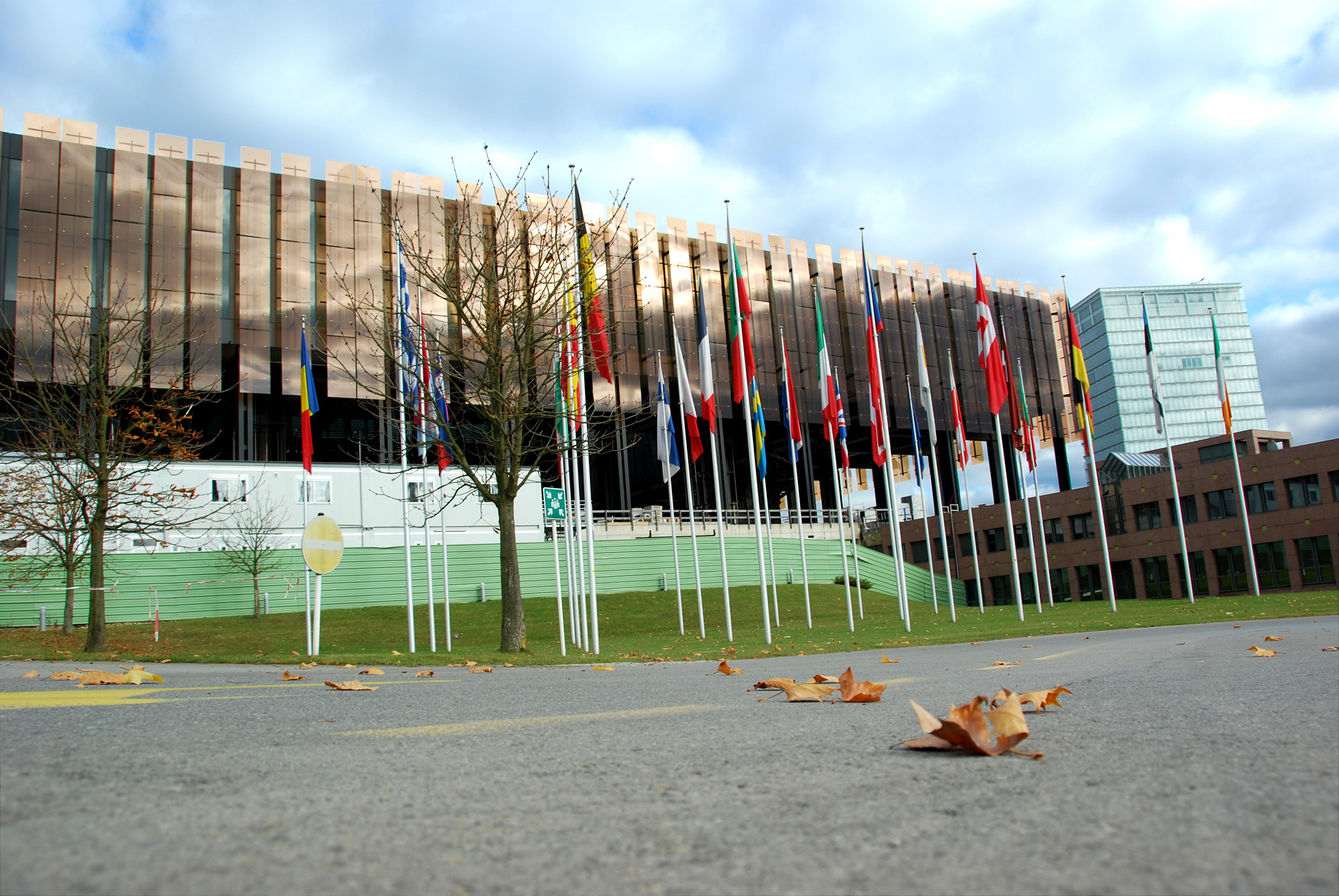
This is a big one and, I believe, a satisfactory judgment.
The VEBIC ruling, handed down today by the ECJ (Plenary Session) promotes an extensive interpretation of how far Member States must go to ensure the effet utile of Regulation 1 (although the principle was not quoted). The Court’s ruling might trigger a legislative change in Belgium or simply prompt the review courts to open proceedings to the Belgian competition council (the judgment says “precluding national rules“).
The case concerned the Belgian competition statute. This piece of legislation institutes a Belgian Competition Council as the NCA. Yet, it does not explicitly entrust the Council with the ability to appear before the competent review court when its decisions are challenged.
In the context of national litigation against a decision of the Belgian Competition Council (under national competition rules!), it was argued that the NCAs could possibly rely on Article 15 of Regulation 1/2003 to submit ex officio observations before national courts. Yet, some doubts existed as to whether (i) this applied to review courts ; (ii) this was a sufficient mechanism (oral observations must be authorized by the court).
More generally, this triggered a debate on wether the loophole in the Belgian legislation was compatible with Regulation 1/2003, and in particular Articles 2, 15(3) and 35(1). The review court referred four questions to the ECJ.
In its judgment, the ECJ quickly excludes that Articles 2 and 15 enshrine any obligation, let alone prerogative, on the part of the NCA, to participate in review proceedings against its decisions.
In contrast, Article 35 requests MS to appoint effective NCAs (§56). This provision reflects the underlying purpose of Regulation 1, which is to ensure that Articles 101 TFEU and 102 TFEU are applied effectively by NCAs.
The practical uphsot of this is to entrust NCAs with the ability to appear in review courts when their decisions are challenged. Otherwise, “there is a risk that the court before which the proceedings have been brought might be wholly ‘captive’ to the pleas in law and arguments put forward by the undertaking(s) bringing the proceedings” (§58).
Hence, Regulation 1 requires Member States to entitle their NCA to participate to review proceedings (§59). In addition, whilst NCAs are under no obligation to use this prerogative sytematically, “if a NCA consistently fails to enter an appearance in such judicial proceedings, the effectiveness of Articles 101 TFEU and 102 TFEU is jeopardised“.
Here’s the full quote:
Article 35 of the Regulation must be interpreted as precluding national rules which do not allow a national competition authority to participate, as a defendant or respondent, in judicial proceedings brought against a decision that the authority itself has taken. It is for the national competition authorities to gauge the extent to which their intervention is necessary and useful having regard to the effective application of EU competition law. However, if the national competition authority consistently fails to enter an appearance in such judicial proceedings, the effectiveness of Articles 101 TFEU and 102 TFEU is jeopardised. In the absence of EU rules, the Member States remain competent, in accordance with the principle of procedural autonomy, to designate the body or bodies of the national competition authority which may participate, as a defendant or respondent, in proceedings brought before a national court against a decision that the authority itself has taken, while at the same time ensuring that fundamental rights are observed and that EU competition law is fully effective.


 Chillin'Competition

