Archive for the ‘Our Publications’ Category
Economics in competition law


Nicolas’ post from yesterday was somewhat of a declaration of lawove to economics. However, as the post noted, in my personal case this love is not at all unconditional.
Nico’s post stated that the “reptilian reflex of dismissing economics as a source of legal uncertainty is misguided“, but acknowledged that “on this point Alfonso has more nuanced views that he will develop here“.
So, here they are.
Those “more nuanced views” have been recently developed in a couple of pieces co-written by Luis Ortiz Blanco and by myself (one was presented at Fordham’s Annual Conference and the other at a GCLC Annual Conference, and both are about to be published as part of the proceedings of these two events). In these papers we argue that the growing influence of economics in competition law enforcement has brought about many positive consequences, but that we should be mindful of letting the about pendulum swing too far. We submit that there is a limit to the concessions that a legal regime can make without renouncing its nature, and that effects-based legality tests might approach decision-making to economic divination to the prejudice of legal certainty.
I’m conscious that these thoughts may not appear be shared by the mainstream (I don’t expect them to make me the most popular guy if I go to Place Lux for a drink tonight). Nevertheless, I do tend to think that there is a silent large minority/majority that supports these ideas. In fact, a very prominent European Commission official read outloud the following paragraphs from one of our papers at a conference held two or three months ago (by the way: he said he liked them, not that he endorsed them), and invited the attendants to reflect on them:
(If interested, click here to continue reading)
Concurrence’s Antitrust Oscars
In spite of its title, this post is not related to our “Antitrust Oscars” series (see here, here, here and here).
My co-blogger Nicolas is, like Apple and Microsoft, on a complaining mood. Last week he was whining about how in the past few weeks I would (allegedly) not have complied with all of my blog-related duties. Nonetheless, he was smart enough to hide the criticism behind an excessive panegyrical of both my firm and myself, so now I feel I need to give something in return. That’s why I’m committed to give a last push to his campaign for Concurrence’s Antitrust Writing Awards:
Some weeks ago we referred here to this most interesting initiative by the Institute of Competition Law and George Washington Law School, and announced that Nicolas had been selected as one of the candidates for the award in the category of academic articles. Since we launched our online-campaign Nicolas’ piece has reached the first position both in terms of rating (4.44/5) and in terms of number of votes (with more than twice as many votes as the runner up) (temporary results are available here).
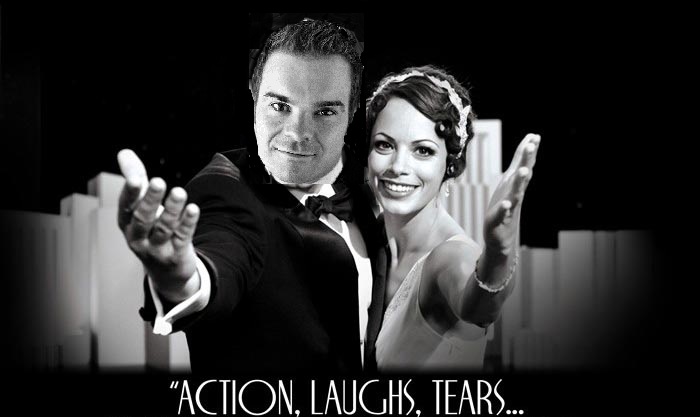
As you know, a French movie featuring a funnily looking French chap (see pic above) was the big winner at the Oscar ceremony held last Sunday. I never thought I would say this, but here it goes: please help the French winning streak continue! (Come on; think that it’s highly unlikely that any Frenchman will be winning anything else in the coming decades near future).
You can vote for Nicolas’ piece on “Credit Rating Agencies, the Sovereign Debt Crisis and Competition Law” by clicking here.
Something no one knows about this piece is that it has inspired a complaint lodged by a member of the Italian Parliament with the Italian Antitrust Authority (see here).
The usual incentive applies: if Nicolas wins, all those writing a comment to this post saying that they have voted for him will receive a free beer by courtesy of the candidate.
The awards ceremony will take place on Washington D.C on 27 March. If Nico wins, that moment could recreate another well-remembered landmark in the history of cinema: “Mr Petit goes to Washington” (see capture of the film below) 😉
 (Thanks to Susana Rodríguez Sogo for assisting with the photo-editing!)
Antitrust Writing Awards

The Institute of Competition Law – the publisher of the journal Concurrences and the e-Competitions Bulletin – and George Washington University Law School, are giving, for the first time, Antitrust Writing Awards. Congrats to Concurrences (with whom, by the way, we have a “partnership” agreement) and to GW University for this great initiative.
Now, the competition for these awards takes place within two distinct relevant markets: there is a category for “Academic Articles” (articles published in academis journals) and another for “Business Articles” (published in professional magazines, alert memos or newsletters). As with all market definitions, this one also entails some debatable elements: in the category for “Academic Articles” thereare 5 pages online papers competing against 50 papers published on reputed journals? Do these belong within the same relevant market?
The decisions with regard to the shortlist of eligible articles were made by the Editorial Committee and then by the Steering Committe of the Institute for Competition Law. The final decisions on the winners are made by the members or the Board of the Institute, who take into account reader’s votes as registered by the Concurrences website.
Nicolas is nominated in the category for Academic Articles. You can click here to vote for his article on Credit Rating Agencies, the Sovereign Debt Crisis and Competition Law
P.S. I’ve never said this here, but if I wasn’t an antitrust lawyer I wouldn’t have mind being a campaign manager, so this is my chance to put at test the use of blogs in campaigning 😉
Patent wars (+ Faull&Nikpay)

It has been reported today that the European Commission is concerned about the use that is being made of patents essential to the 3G mobile communications standard in the context of the ongoing legal battles surrounding the smartphone technology markets.
The Commision has confirmed that it has addressed requests for information to both Samsung and Apple, but it has not yet provided any further details. A legal filing by Apple in the U.S. nevertheless reveals that this preliminary investigation on the part of the Commission may be targetting a possible abuse of FRAND (Fair Reasonable And Non Discriminatory) licensing agreements on the part of Samsung, which in the recent past has initiated a large number of proceedings against Apple in several jurisdictions.
This is not the first antitrust investigation regarding anticompetitive behavior related to enforcement, use and misuse of patents undertaken by the EU Commission (think, for instance, about the Qualcomm or Astra Zeneca cases), and it certainly won´t be the last. Patent wars may be a newcomer in the antitrust world, but they´re here to stay.
By the way, I´m very fortunate to be -together with Miguel de la Mano (Deputy Chief Economist at DG Comp and currently Acting Chief Economist at the UK´s Competition Commission), Hans Zenger (CRA), and Renato Nazzini (LMS and Southampton University)- part of the team that is currently should be drafting the chapter on Article 102 for the next edition of the Faull&Nikpay (which, as you know, is one of our favorite books), and given the rise of IP-related abuse of dominance cases we´re planning to devote a specific section to these issues.
Have a nice weekend!
(Image possibly subject to copyright)
General Interest

A few weeks ago, I have been asked to make conclusive remarks at a conference on “Competition law and the general interest” (BTW, the picture above shows Paris Hilton serving “general interest” works after having been found guilty of unlawful drug possession).
I attach my text below. This is far from ground-breaking, and if anyone has suggestions on how to improve the text, I’ll surely take them on board.
That said, it was the first time I was asked to do this, and it was a lot of fun.
The proceedings of the conference (in French), will soon be published by Larcier.
Droit de la concurrence et intérêt général – Final (03 11 11) NP
“Canada Dry” Decisions

The ECJ ruling in Tele2 Polska is a joke (actually a bad one).
I’ve already blogged on the nefarious effects of this ruling. Today, I’d like to make a few more points.
Remember: the judgment states that National Competition Authorities (“NCAs”) cannot, under Regulation 1/2003, adopt declaratory decisions stating that there has been no breach of Article 101 and/or 102 TFEU (on the merits).
This judgment is likely to have far reaching consequences. As written in a paper below, and confirmed by a number of colleagues at the GCLC lunch talk yesterday, it means that NCAs cannot adopt individual exemption decisions under Article 101(3) TFEU.
Since the inception of Regulation 1/2003, however, many – including me – have repeatedly stated that decentralisation was all about empowering NCAs to take Article 101(3) TFEU decisions. More importantly, several NCAs have taken exemption decisions over the past 7 years. Is this decisional practice now unlawful?
The Commission’s response to this is that the ruling does not change much. Rather than taking a negative decision under 101(3) TFEU, the NCAs can still adopt decisions that “there are no grounds for action on their part” pursuant to Article 5 of Regulation 1/2003.
Now, is this really true? As noted by F. Zivy yesterday, could a NCA conceivably write in a decision: « The impugned practice infringes Article 101(1) TFEU. There is strong evidence that it is nonetheless justified under Article 101(3). But we are sorry, the only thing we can do is to say there are no grounds of action against this infringement”?
Or to be even more extreme: “The impugned practice constitutes an infringement of Article 101(1) TFEU. Hence, there are no grounds of action on our part“? Come on..
To me, decisions that there are no grounds of action are like Canada Dry to “negative decisions”: they look like negative decisions, they taste like them, but they are not like them.
In practice, rather than making such paradoxical statements, NCAs willing to exonerate anticompetitive agreements are likely to reason within Article 101(1) TFEU, under a “rule of reason“-like approach (which BTW has been consistently held alien to EU law by the ECJ).
A last remark: the judgment is primarily based on a litteral reading of Article 5 of Regulation 1/2003 which sets the powers of NCAs, and is supposed to be exhaustive. Article 5 says nothing of inapplicability decisions. hence, NCAs cannot take them.
Now, has the ECJ really read Article 5 of Regulation 1/2003?
I mean had it done so, it would have realised that this provision is all about the decisions taken for the application of Article 101 and 102 TFEU (“The competition authorities of the Member States shall have the power to apply Articles 81 and 82 of the Treaty in individual cases“). Hence, it is somewhat unavoidable that this provision is silent on negative decisions, that DO NOT apply Articles 101 and 102 TFEU.
Hereafter a paper that I have written with my assistant (in French) + the slides presented at the GCLC lunch talk yesterday.
Commentaire Tele 2 Polska – Petit et Lousberg – Final
Our Fordham Paper

Just before the summer we anticipated that Chillin´Competition readers would have a virtual seat at the mother of all antitrust conferences Fordham´s Annual Antitrust Conference (see here and here). As you may recall, Luis Ortiz Blanco had been asked by Barry Hawk to chair a panel on European competition law enforcement featuring a very impressive line-up of speakers (namely Alexander Italianer, John Finfleton, Bruno Lasserre, Andreas Mundt, and Manuel Sebastiao).
Luis and I decided that it could be interesting to profit from this opportunity to draft a paper examining the current state of EU competition law enforcement in terms of effectiveness and uniformity. We decided to draft an unorthodox paper which touches upon many issues and that concludes every section with a question. Those questions were the ones posed to the panelists at the roundtable.
The brainstorming work that preceded the drafting of the paper was mainly based on the suggestions and ideas that we received from readers of this blog. Accordingly, Barry Hawk has given us his very kind permission to post the version of the paper that was distributed at the conference on this blog.
Here it is: Ortiz & Lamadrid_European Comp. L. Enforcement
(Considering that drafting this took a substantial portion of my summer holidays, I really hope that at least one or two of you read it! )
Our intention is to edit it and turn it into a standard academic paper with a view to its publication in the annual volume edited by Barry Hawk. Any comments that any of you may have on the current version of the paper would therefore be most welcome and, of course, duly acknowledged.
Fordham Brainstorming Room (I)

As we announced last Friday, and thanks to Barry Hawk and Luis Ortiz Blanco, in the upcoming weeks we will be using this blog as a “brainstorming room” to come up with issues related to “European Competition Enforcement” that could be worth discussing at the 2011 edition of Fordham´s 38th Annual Conference on International Antitrust Law and Policy.
In addition to having your suggestions appear on the blog, once in a while we will devote a post to setting out our own ideas on possible topics.
Here go a handful of them. We look forward to hearing your views!
1. Positive v. Negative Enforcement of Competition Law
a. “Negative” decisions (decisions concluding to the absence of infringement). If we follow Tele2 Polska, NCAs cannot adopt such decisions under Regulation 1/2003. Importantly, this ruling may have an impact on how a number of NCAs run their decisional business, and in particular the French CA which occasionally adopted negative decisions.
b. Inapplicability decisions and guidance letters. Under Regulation 1/2003, the Commission can adopt several types of negative decision. To date, the Commission has never used such powers. In light of (a) stakeholders face now a competition enforcement system that looks very prohibitive. Query: could this lead to over-fixing/type I errors (with firms being excessively risk averse)?
c. Guidance on firm behavior through non-decisional instruments. As we reported on a previous post, the French CA adopted earlier this year a report (avis) on Google and more generally on search advertising. The French CA has an important track record in relation to such reports. Those documents are somehow akin to positive decisions in the making: they contain only provisional findings and do not prescribe remedies. Yet, they are a considerable source of concern for the companies targeted in such reports. They make individualized statements on market definition, dominance, abuse and so on. In practice, they may trigger follow-on complaints from third parties, litigation, etc. By contrast to positive decisions adopted as a result of formal proceedings, the companies targeted by such reports have little procedural rights.
2. Priority setting, “opportunité des poursuites”. On which sectors/practices should Commission/NCAs focus, both in abstract terms (e.g. sectors where consumer welfare improvements can be large?) and concrete ones (e.g. financial services?) ? Should there be coordination EU/NCAs and NCAs/NCAs in relation to the definition of enforcement priorities?
3. Impact assessment. How to quantify the contribution of competition policy to economic growth and other macro-economic indicators (investment, productivity, employment, etc.)?
4. Alrosa-like case law. A question on the state of play at the national level (Can commitments go further than conventional remedies? Can they escape a strict proportionality assessment?)
5. Appeals. NCAs ability/duty to stand in review courts to defend their decisions (see the VEBIC ruling, also commented on previous posts).
6. Integrated v. bifurcated agency model. Think of the ongoing discussions over the merger of the OFT and the CC in the UK.
7. Competition within agencies. It is somehow of a “secret de polichinelle” that there are diverging views on the effects-based approach between the Legal Service and DG COMP. Are such situations beneficial or counterproductive? In the latter case, could they be avoided?
8. Private enforcement. The elephant in the room? What are NCAs doing and what can they do to foster private interaction? How do they feel about the Judgment issued yesterday by the ECJ which states that it is a matter for national courts to discern whether access to leniency documents can be granted to parties seeking evidence to substantiate claims for damages?
Draft Op-Ed on Inflation and Competition Policy in Belgium

It took me part of the day to draft the attached text (in French).
Comments are very welcome. The thing should go to press shortly.
Carte blanche – Indexation automatique Inflation et Concurrence – N Petit
Fine Arts in Brussels

In the past few days both Commissioner Almunia and Cecilio Madero, Deputy Director General for Antitrust, have spoken publicly about sanctions for breaches of EU Competition law (see here and here). Both have praised the current EU enforcement system as well as the changes that have been introduced to improve enforcement practice, namely the settlement procedure.
In his speech, Mr. Almunia also made a very welcome announcement. From now on “the Commission will indicate already in the Statement of Objections itself, the elements for the calculation of the fine such as the value of the cartelised sales – which is a critical factor – but also, for example, an indication of the gravity and issues of recidivism”. I see this as a great development, and one for which the European Commission must be congratulated.
But there are still a few issues which, in my view, should also be reconsidered by the Commission. Some opinions and suggestions in this regard are developed in an article I´m specially proud of, titled “Fine Arts in Brussels, Punishment and Settlement of Cartel Cases under EC Competition Law”. This article was authored by Luis Ortiz Blanco, Angel Givaja and by myself; it was presented by Luis Ortiz Blanco at a conference in Treviso in May 2008 and later published on the book Antitrust, Between EC Law and National Law.
Until now this article had never been available online, so we´ve decided to remedy that and make it available to the readers of this blog. As you will see, the arguments in this article are accompanied by Roman numbers; those numbers refer to paintings which graphically illustrate those ideas.
Here it is:


 Chillin'Competition