Archive for the ‘Uncategorized’ Category
Launch of the Third Edition of European State Aid Law and Policy: Congratulations to Conor Quigley QC!

I was truly delighted to attend, last week, the launch party of the third edition of Conor Quigley’s famous European State Aid Law and Policy. I managed to forget that the event was yet another painful reminder of my old age and enjoyed the time with the author and other guests. I do not think it is necessary to say much about the book itself, which has acquired an outstanding reputation over the past decade. The new edition will no doubt be as successful as the preceding ones. I remember using the (much slimmer) first edition back in Bruges and I am pleased that the book has grown together with the discipline. Needless to say, my anxious self cracked and bought a copy at the event. It was absolutely indispensable to take a look at the way in which recent developments were covered. What else would you do on a Wednesday evening?
Since the date of the Chillin’ Competition Conference is approaching, it makes sense to add that Conor Quigley will be one of our speakers. We look forward to seeing many of you on 19 November in Brussels!
Case C‑23/14, Post Danmark A/S v Konkurrencerådet: first thoughts on the judgment

As announced by Alfonso, here I am to share some thoughts on today’s ruling in Post Danmark II. It is impossible to do full justice to it in a blog post. It is incredibly rich and some of the points can only be meaningfully developed in independent posts that I will try to publish in the coming weeks.
I would mention for the time being that the ruling is valuable, first and foremost, for the many issues that it clarifies. The effort in this sense is apparent (and very successful). There is also a clear attempt to bring together different strands of the case law and to achieve overall consistency (both within Article 102 TFEU and across provisions). I find it much easier to explain Article 102 TFEU case law to my students after the ruling.
It is useful to distinguish, as I have done in past entries, between issues of principle (relating to Article 102 TFEU as a whole) and issues that are specific to rebate schemes.
Issues of principle
Abuses by object and by effect: The ruling further confirms that the object/effect divide exists in the context of Article 102 TFEU. As the law stands, some practices are prima facie prohibited as abusive irrespective of the context and effects they produce (this category includes exclusive dealing and loyalty rebates). Other practices are only prohibited insofar as they have exclusionary effects (such as ‘margin squeeze’ practices and standardised rebate schemes).
Threshold of effects: While it has been clear for a while that some practices are only abusive where they have exclusionary effects, the relevant threshold has remained elusive. In line with the Advocate General, the Court seems to hold that the relevant threshold is one of likelihood. Post Danmark I is paraphrased in the ruling to state that the relevant question is ‘whether the conduct of the dominant undertaking produces an actual or likely exclusionary effect, to the detriment of competition and, thereby, of consumers’ interests’ (para 69). Para 67 (‘only dominant undertakings whose conduct is likely to have an anti-competitive effect on the market fall within the scope of Article 82 EC‘) is equally eloquent.
Effects on what?: The case law was not entirely clear as to the effects to consider when examining the lawfulness of potentially abusive practices. Some rulings gave the impression that the impact of a practice on the contractual freedom of the customers of a dominant firm was sufficient for Article 102 TFEU to come into play. Post Danmark II suggests that this is not enough. The impact of the practice on the competitive process needs to be considered. The assessment of all the circumstances relates to whether the practice ‘makes market entry very difficult or impossible for competitors of the undertaking in a dominant position’ (para 31). It is now credible to claim that the notion of ‘effects’ has a single meaning across competition law provisions (I will develop this thought further in a separate post).
Issues specific to rebate schemes
Scope of the prima facie legality rule: As I explained in my paper, the rebate scheme applied by Post Danmark was based on the volume supplied. It was therefore reasonable to infer from Hoffmann-La Roche and Michelin I that it was presumptively lawful under Article 102 TFEU. The ruling (para 28) clarifies that the prima facie legality rule only applies to rebate schemes that are (i) based on volume and (ii) that relate to individual orders. Only this category of rebate schemes is presumed to be justified by the cost savings made by the firm. The Court seems to attach importance to categories but redefines them.
Assessment of ‘all the circumstances’: According to the Court, it is necessary to consider all the circumstances to determine whether a system of standardised rebates has exclusionary effects. Such factors include the position of the dominant supplier and the conditions prevailing on the relevant market (para 30); the rules and criteria governing the grant of the rebate (para 32), and in particular the retroactive nature of the scheme and the length of the reference period. Beyond the specific issues, the judgment proposes a true effects-based analysis. The regulatory context and the features of the relevant market seem to play a crucial role in the assessment (as they should).
More on the analysis of effects:
- The expressions ‘fidelity-building’ and ‘loyalty-inducing’ seem to be absent from the judgment. These expressions were used in rulings that suggested that a restriction in the commercial freedom of the customers of the dominant firm is sufficient to establish an abuse. This conspicuous absence suggests, in line with what I pointed out above, an attempt to bring together different strands of the case law and to propose a true analysis of effects.
- Precisely because the Court engages in a careful analysis of the impact of the practice on the competitive process, the references to de minimis and the appreciability of the practice seem to be of little theoretical or practical relevance.
Relevance of the ‘as efficient competitor’ test: Unsurprisingly, the Court holds that the relevant case law does not mandate the ‘as efficient competitor test’ (para 57). Equally unsurprisingly, it holds that the purpose of the Guidance is merely to set the priorities of the Commission as a competition authority (para 52). More interesting is para 58, where it states that the above ‘ought not to have the effect of excluding, on principle, recourse to the as-efficient-competitor test in cases involving a rebate scheme for the purposes of examining its compatibility with Article [102 TFEU]’. In the specific context of the case, the test is not deemed to be relevant. I am inclined to agree with the Court. You may remember that I said ‘never say never’ in a previous post. Well, Post Danmark II is a good example showing that sometimes even rebate schemes that do not amount to below cost pricing can be exclusionary (the regulatory context is crucial in this regard and supports this conclusion, in my view).
Objective justification: In line with Post Danmark I, the Court confirms that an objective justification is available to dominant firms, and that it may relate to the efficiency gains made through the award of the rebate scheme (para 48). This is the aspect of the ruling that is likely to prove more controversial. Because the scope of the legality rule is defined so narrowly, it is not obvious to see how an efficiency defence will succeed (but I may be wrong). In this regard, the ruling seems to be in line with Michelin II (which helps explain, in turn, why an objective justification has not been put forward by dominant firms in some recent cases). I will develop this point elsewhere.
This seems enough for today. As usual, I would love to read your views on the ruling!
Single and continuous infringement

Before this blog is flooded with the zeitgeist debates on the Post Denmark II Judgment issued this morning (the good news for Pablo is that all his previous posts on the subject remain valid…), here are the slides (in Spanish, sorry) that I used this morning for my intervention at the Spanish Competition Authority, as announced in my previous post:
Infracción única y continuada- Alfonso Lamadrid
(Many thanks to Paloma Lantero for the help in preparing them)
Cartel-related thoughts, ads and requests

I’m in a train preparing the slides for my intervention next Tuesday at the Spanish Competition Authority´s and USP CEU’s conference on the fight against cartels in the Iberoamerican Community (EU, Spain, Portugal, Brasil, Mexico, Argentina, Chile and Colombia).
The conference will also be an opportunity to present a hot-off-the-press book on cartels (pictured above) to which I have contributed with a quite significant number of pages, taking care of the chapters on cartel procedure (together with JL Buendía) and on cartel evidence (together with Ana Balcells). The book is part of a project directed by Jerónimo Maillo and coordinated by Javier Porras.
My intervention on Tuesday will focus on one of the sub-topics discussed in one of the two chapters: the interpretation of the notion of “single and continuous infringement” in EU and Spanish competition law. Despite being the essence of the “cartel offence” and a feature of practically every single cartel decision, there are still perplexing divergences in how the notion is interpreted throughout the EU. I also see some divergent trends: whereas the concept keeps on expanding at the national level, EU Courts seem to be adopting a more restrictive interpretation, particularly when it comes to establishing individual liability for the whole infringement (the trend was made evident with Coppens and Aalbers and again only a few weeks ago in the Toshiba Judgment). If any of you has thoughts on the matter, I would appreciate if you would send them my way (I can offer a beer in reward).
And since I’m asking for favours, if anyone from Colombia reads this (I’ve just checked the blog’s stats and it seems we have a good number of Colombian readers), I’ll be happy to return there to speak about anything. It doesn’t have to be competition law: I only need a excuse to visit my brother living in Bogota pretending it’s a work-related trip 🙂
And since I’m mixing famly and cartels: I recently told my mum that I had worked in a case where cartel meetings had taken place in a hotel we know well. She thought there could be a niche there, and has asked me to please advertise to any potential cartellists that I know that my parent’s hotel has very suitable facilities for cartel meetings, is quite hard to get to (undoubtedly an advantage for this purposes) and can offer a tie/ discount in legal services. Special prices would apply to continuous infringements.
Finally, those interested in cartels should know that our friends at ERA are holding a workshop on cartel enforcement in the EU in Brussels on 29 October. For more info, click here.
Update on the Chillin’Competition Conference

As recently announced, the Chillin’Competition Conference will be taking place in Brussels on November 19th.
The programme is practically finished and we hope to publish here next week. In the meantime (and since work has precluded me from writing anything more substantive today) we can give you some additional details:
-Where? The conference will take place at the premises of the Federation of Belgian Enterprises, in Rue Ravenstein 4, Brussels.
-When? On Thursday, November 19th, 2015, from 9.30 a.m. to 19 p.m, although there will be drinks afterwards [actually, not only afterwards, you’ll see 😉 ]
-What? We will be holding 5 panels, each with 5 panelists, one touching on object/effect issues in Arts. 101 and 102; one on competition in the online world, one on competition and IP, one on institutional and procedural issues, and one on State Aid.
-Who? We have managed to have a quite impressive line-up of speakers, including a member of the CJEU, several Commission officials, national judges, academics and quite a few top-notch practitioners (I’m sure my firm will appreciate that I organize an event to showcase competitors). Quite impressively, only two of the many people invited have said they unfortunately could not make it [a clue: one is Danish :)]. Pablo and I will not be speaking, since –as you might have noticed- we’ve already depleted our stock of ideas.
-How much? Nothing, but if you ever see us around, you can invite us to a couple of beers.
We can also safely announce that we will be breaking a good number of the 10 commandments for Brussels conference organizers.
-Sponsors. We are immensely grateful to those who have so far agreed to contribute to the conference via sponsorships, so far (for the sake of clarity, the bold in “so far” means that others can still join; but hey, no pressure…): Cleary Gottlieb, CCIA, Covington, Garrigues, Gibson Dunn, Hart Publishing, Herbert Smith Freehills, Inbev, Linklaters and White & Case.
Whish & Bailey and the marketplace of ideas in EU competition law
The successive editions Paul Samuelson’s legendary textbook accurately capture the evolution of economic thinking over the second half of the 20th Century. It is the most obvious starting point to get a sense of the shift in consensus positions on many issues, including the viability of central-planning or the role of monetary policy.
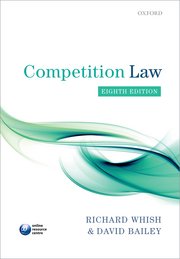
It is probably appropriate to say that Whish & Bailey’s Competition Law is our discipline’s Samuelson. It has been widely (and rightly) praised for its clarity and has long set (and still does) the standard for other textbooks in (EU) Competition Law (also when it comes to the jokes). As much as Samuelson’s Economics, it also reflects consensus positions. This is the reason why I open with excitement every new edition of Competition Law to spot changes in the text (and this in spite of the fact that it is each time a painful reminder of one’s old age).
I received the 8th edition a few weeks ago (I have all editions from the 5th, with which I studied in Bruges). As I expected, there is a relatively lengthy discussion of Cartes Bancaires (pp. 125-127) and its impact on the textbook’s trademark framework, which revolves around the famous ‘object box’. The analysis of the Court in that case (and in previous ones, such as Allianz Hungaria) shows that the ‘object box’ approach is not always reliable. The discussion of this question in the new edition is in any event interesting and valuable. And there is no doubt that the ‘object box’ will help thousands of students to make sense of the underlying legal concept!
Another key change comes in the treatment of exclusive dealing and loyalty rebates. The book used to take a marked normative stance on the question. In the past two editions, the author(s) expressed a preference for an effects-based approach to exclusive dealing. Similarly, they considered that the application of the ‘as efficient competitor’ test to loyalty rebates by the Commission could have a positive impact on the substance of the law.
The 8th edition is remarkable in that it adopts a positive stance on these matters. The authors no longer dispute the current state of the law. They simply explain that exclusive dealing and loyalty rebates are prima facie prohibited and that it is for dominant firms to put forward an objective justification for their behaviour. The new edition is also a good reminder for students that there is no such thing as a per se prohibition in EU competition law.
It is not difficult to guess what might be behind these changes. Wouter Wils’s article on Intel (announced in this blog) has had an enormous impact in the competition law community – it is probably the most read article of the past 12 months. Regular readers of the blog will remember that Richard Whish wrote an editorial defending the prima facie prohibition of exclusive dealing shortly after that article was published.
The changes introduced to the new edition show, above all, that ours is a discipline in a constant state of flux. Some of my colleagues regret that the law in some areas has become so stable that there are hardly any interesting theoretical or practical questions. For better or worse, EU competition law is really far from reaching that stage.
I genuinely thought – and I do not think I was the only one – that the Commission Guidance on Article 102 TFEU captured reasonably well the consensus around the appropriate treatment of exclusive dealing and loyalty rebates. It is now clear that such consensus does not exist, and may never have existed. From this perspective, Wils’s article played a valuable role, in the sense that it has prompted a vigorous (and necessary) debate on issues of principle. It is not a secret that I hold different views. But as a firm believer in competition, even (or rather, especially) when it comes to ideas, I am convinced that a more robust, consistent and sensible competition law system will emerge from this debate!
More on Big Data and Competition Law

To sighs of relief among the audience I have just finished my intervention at ERA’s conference “Competition Rebooted: Enforcement and personal data in digital markets”.
My slides are available here: Competition Big Data_Lamadrid
Nothing of what I said will sound new to frequent readers of this site; the content of my presentation has a lot to do with previous posts on the subject (see here, here and here).
The contributions from the EDPS himself, Jorge Padilla, Orla Lynskey, Maurice Stucke, Patrick Van Eecke, Cyril Ritter, Amal Taleb, Cecilia Parker and Christian D’Cunha were all much more interesting. If interested in their slides, then you should have registered 😉
On the FTC and LSD
You might remember that last week, in the post in which we we announced the date of the Chilling’Competition Conference, I included a sort-of-hidden sort-of-joke saying that we were taking inspiration from the organizers of another recent successful conference.
I didn’t explain what that conference was about but instead included a hyperlink. Those of you that clicked on it (only 195) were redirected to a The Guardian’s piece about a homeopathy conference in Germany where a number of people were intoxicated with an LSD-like drug and experienced psychotic hallucinations, cramps, racing heartbeats and shortage of breath only to be found rolling around on the floor by the emergency services. [the piece was sent to me by my colleague Luis Ortiz with a phrase saying “you need to use this somehow on the blog”. How Luis got to that news in the first place is still beyond me…]
When I wrote this I truly was not thinking about organizing any LSD related event under the cover of an homeopathy conference (sorry if that’s a dissapointment; there’ll be other surprises though).
But others seem to have taken our suggestion seriously. Today I ran a quick search for upcoming antitrust-related stuff, and thanks to Reuters I discovered this (really, no kidding, see here)

No comment 🙂
What’s with this obsession with the objectives of EU competition law?

Bob Solow, a Nobel Prize laureate, once said the following of Milton Friedman: ‘Everything reminds Milton of the money supply. Well, everything reminds me of sex, but I keep it out of the paper’. I think very often of this superb quote (and of the money supply) when reading competition law scholarship.
It would seem that there is always a valid reason to discuss the objectives of EU competition law, or to explain a legal controversy by reference to them. Authors disagree about the substantive standard that should apply to a practice? It must be the case that they disagree about the objectives that should guide EU competition law. A discussion about, say, vertical restraints? Pondering whether consumer welfare should be the goal underpinning the enforcement of Article 101 TFEU is absolutely necessary.
What I find interesting is that, the more I dig into the case law and administrative practice, the more apparent it is to me that the objectives of EU competition law are of marginal relevance in the decision-making process. My own research efforts lead me to the conclusion that, with very few exceptions, this question plays a very limited role (if at all) when the Commission or EU courts consider whether, and in what circumstances, a given line of conduct should be prohibited. It is simply a mistake to assume that a specific substantive test follows logically from a particular objective, or that a disagreement about the objectives that should guide EU competition law necessarily results in a disagreement about the test to apply in the context of a particular case.
Against this background, I asked myself why this issue features so prominently in academic and non-academic discussions. I can think of the following explanations (as usual, I would very much welcome your thoughts):
- Use as a rhetorical device: Challenging someone’s position by arguing that the arguments are only valid when a given objective is endorsed is often very effective. ‘What you say makes sense, but unfortunately consumer welfare is not the objective of EU competition law’, is indeed a powerful rhetorical device that can, moreover, prove useful to avoid addressing difficult questions.
- It is relatively easier: abstract discussions about the objectives of EU competition law may not be very useful in practice, but they often require little effort, or at least much less effort than reading carefully the case law and administrative practice and inferring principles from them. It is probably the case that the latter, no matter how necessary, is also less attractive for many.
- The influence of economics: It makes sense for economists to think about issues by reference to a benchmark against which the lawfulness of a practice can be established. The influence of economic analysis in the field may explain why even academic and non-academic lawyers display a tendency to go about questions in the same way. This is an additional reason why doctrinal analysis may be neglected.
For those readers who thought they would never see it, there you have it: I have just provided a clear example of why the influence of economic analysis might have proved negative in one important respect: it may have the effect of inducing legal scholars to engage in research that is not significant or that contributes little to the understanding of the discipline. I guess this blog can still bring surprises every now and then!
The Chillin’Competition Conference- SAVE THE DATE

The first Chillin’Competition Conference will be happening in Brussels on Thursday 19 November 2015.
We are in the process of contacting speakers and hope to be done by the end of the week, so you can expect more information very soon.
For the time being we can tell you that the conference will be free for attendees. It will be funded by contributions from sponsors and any money exceeding our costs will be given to NGOs dealing with the refugee crisis.
We are also in touch with the organizers of this very successful conference to see whether we can get some ideas… 🙂


 Chillin'Competition