Archive for the ‘Uncategorized’ Category
Antitrust Quotes of the Day

On the alleged non-structural views of Chicago scholars => “An industry which does not have a competitive structure will not have competitive behavior” (George J. Stigler, “The Case Against Big Business,” Fortune, May 1952)
On the 2004 Microsoft case => “The Commission’s case was like a jellyfish – shapeless and very painful” (I. Forrester). Thanks to I. Debois for the pointer.
Unknown Truths about a Famous Antitrust Father
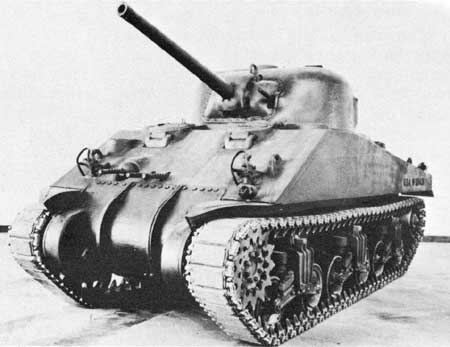
I just read a short and interesting piece by W. Kolasky on the life of one of the most anonymous antitrust celebrities: John Sherman. A few things worth keeping in mind:
1. John Sherman’s name has been used by the British army to name Medium Tanks M4. In the British army, it is conventional to name American-built tanks after famous Civil War generals. Whilst John Sherman was a politician, his brother, William Tecumseh Sherman was one of the most famous Union Generals during the civil war.
2. The Sherman Act originates in a bid to protect tariff regulations that promoted domestic US industrial interests (!). In the late XIXth century, the democrats alleged that protective tariffs had caused the spread of domestic trusts. Sherman, a Republican and a fierce defender of tariff legislation, sought to rebuff the link between the rise of trusts and tariffs. Eventually, to reduce pressure to abolish tariff legislation, the republicans were left with no other choice but to promote anti-trust legislation (p.86).
3. Following years of fierce parliamentary debate (p.87), the final version of the Act was expunged of most of the wording initially proposed by Sherman, and replaced by the text that we know (p.87). The disappointed J. Sherman later commented that this change in wording would deprive the bill of all effectiveness. He is quoted to have said that the bill would be “totally ineffective in dealing with combinations and Trusts. All corporations can ride through it or over it without fear of punishment or detection.” (p.88)
PS: Some law firms, like WilmerHale, follow an open-access publication policy. Most papers written by their lawyers are publicly available on their website. Nice.
Draft Op-Ed on Inflation and Competition Policy in Belgium

It took me part of the day to draft the attached text (in French).
Comments are very welcome. The thing should go to press shortly.
Carte blanche – Indexation automatique Inflation et Concurrence – N Petit
38th Annual Conference on International Antitrust Law and Policy- A virtual seat for Chillin’Competition readers

The 38th edition of the Annual Conference on International Antitrust Law and Policy directed by Barry Hawk at Fordham Competition Law Institute will take place in New York on Wednesday, September 7 and Thursday, September 8, 2011. As usual, the conference will feature la crème de la crème in international antitrust (see here for this edition´s truly impressive programme).
As long-time admirers of this conference and avid readers of its published annual proceedings, Nicolas and I are very glad to offer our readers what we see as a unique chance to contribute to the discussions that will take place there this year. Here’s how:
Amonsgt other most interesting panels, on this upcoming edition there will be a roundtable on “European Competition Enforcement”. The line-up of panelists for the roundtable on this topic is certainly unmatchable: Alexander Italianer (Director General, European Commission); Bruno Laserre (President of the French Conseil de la Concurrence); John Fingleton ( Chief Executive at the UK´s Office of Fair Trading), Andreas Mundt (President of the Bundeskartellamt) and Manuel Sebastiao (President of the Portuguese Autoridade da Concorrencia). The task of chairing a bunch of chairmans will fall upon the shoulders of the competition lawyer I´ve always looked up to Luis Ortiz Blanco.
I will be assisting Luis in the drafting of his written contribution, and while dicussing about it an idea sprang to mind. Given the surprising and rising number of competition law experts from all over the world who read this blog, we thought it could be very interesting to ask you to share your ideas on issues related to European Competiton Enforcement that you think should be dealt with by the speakers taking part in this roundtable. We proposed it to Barry Hawk and he also thought it could be interesting, so that’s what we’re doing now.
If you wish to directly contribute to this top-level discussion with your thoughts or experiences on issues related to European competition enforcement, please send them to us preferably as comments to this post. Please note that all of your suggestions will be seriously considered as potential issues to be thrown to the panel, but also that we cannot guarantee that all of them will make it there.
Thanks go to Barry Hawk and Luis Ortiz Blanco for this opportunity. We look forward to hearing about your ideas!
Antitrust Syllogism of the Day

Combine: “… negotiation between competitors may facilitate the supreme evil of antitrust: collusion” (Supreme Court Justice A. Scalia, Verizon Communications, Inc. v. Law O¢ ces of Curtis V. Trinko LLP, 2004)
with: “Collusion of firms can take many forms, of which the most comprehensive is outright merger” (G. J. Stigler, “Theory of Oligopoly”, (1964) 72 Journal of Political Economy, 44)
and get → “the supreme, most comprehensive, evil of antitrust is outright merger“
Or a good antitrust illusltration of the limits of legal syllogism.
2011 Moot Court in French Competition Law (Concours Lamy de la Concurrrence)

To the best of my knowledge, the Concours Lamy de la Concurrence (in French) is the sole moot court competition specifically devoted to antitrust law in the EU.
Last year, a team of Liege LL.M students won the first edition.
This year, our team reached only the semi-finals. I would nonetheless like to congratulate E. Baretta, D. Auer, J. Dahmoun and their coach E. Provost for placing their crew before 10 other teams (out of 14). Congrats’ also and best of lucks to the finalists who seem to be very strong competition lawyers.
As you may understand, the primary purpose of this post is to make some advertisement for the final oral pleadings of the Concours, which will take place at the Paris Court of Appeals on 8 June (at 5.00 pm). For more information, please write to concoursconcurrence@lamy.fr.
Subversive Thoughts (2) – Excessive Pricing
Today, I would like to advance again four heretical propositions, this time in relation to excessive pricing cases under Article 102 TFEU. In essence, they challenge the mainstream view that there are insuperable conceptual and practical hurdles to the control of dominant firms’ pricing policies. No doubt this will again trigger opposition from the mainstream.
A Proposed Theory of Harm for Excessive Pricing Cases, the Foreclosure of Ir-Relevant Markets – To start, I believe that there is a reasonably sound – and overlooked – conceptual basis to challenge monopolists’ excessive pricing policies on the basis of the antitrust rules. Take a monopolist charging excessive prices in market A (the relevant market). With this, the monopolist dries up demand on neighboring markets (B, C, D …). But this is not all. He also dries up a range of unrelated markets (W, X, Y, Z) which include virtually all the markets where customers make purchases of goods/services. To take one example of this, a customer faced with an increase in the price of oil will purchase lesser quantities of milk, cereals, fruits, etc. (assuming finite resources). The monopolist’s pricing policy on market A thus forecloses – possibly unwillingly – the sales opportunities of other producers on a range of ir-relevant markets. In turn, this may force out a number of firms of those markets, increase concentration, decrease entry opportunities and eventually harm market competition. This effect will be particularly acute on markets relating to products/services that do not fulfill basic needs, where customers will simply forego consumption.
But this is not all. With this conduct, the monopolist may even distort, and drive demand up in market A. This is because consumers foregoing consumption of B, C, D, W, X, Y, Z will divert their freed resources towards market A, thereby consuming more of the monopolist’s product (for instance, because they fear a further increase in the price of A). This may give rise to extra-superprofits on the part of the monopolist.
From an economic standpoint, there is nothing truly shocking to my proposition. After all, we know since Walras that markets work altogether in equilibrium. Moreover, it suggests that dominant firms’ excessive prices inflict a collateral damage on other firms which, in the word of economists, is akin to a negative externality. Hence, there is good ground to regulate such pricing practices. Finally, the emphasis of this proposed theory of harm is on foreclosure (and not on exploitation, thereby limiting the risks that agencies will seek to achieve distributional goals).
In practice, the upshot of this first proposition is that competition authorities, who often view markets as silos, should not shy away from thinking outside of the box relevant market. There is nothing wrong to consider the effects that price increases may have on other unrelated markets. After all, competition authorities do this all the time. Think for instance of the complexities involved in the balancing, under Article 101 TFEU, of the anticompetitive effects of an agreement in market 1 with its pro-competitive effects in market 2. Likewise, many theories of harm under Article 102 TFEU involve practices that take place in one market, and that have anticompetitive effects in another market (e.g., predatory pricing, tying, etc.).
A Proposed Practical Benchmark to Screen Excessive Pricing Cases – The most powerful argument against excessive pricing cases is practical in nature. No one, let alone antitrust regulators, can arguably say at what level a price (and a profit margin) becomes excessive. Moreover, price-costs benchmarks would be unpractical, because there would be insuperable cost-measurement problems in a number of areas (e.g. multi-products firms, etc.). Read the rest of this entry »
Overzealous antitrust enforcement in Spain?

A couple of days ago Nicolas wrote a post reporting the concerns expressed by some experts in relation to a possible enforcement gap in Italy in light of the fact that the Autoritá Garante has been mainly focusing on investigating unfair competition cases rather than on pursuing antitrust cases. Apparently, some of the lawyers who attended the conference at which Nicolas was present bemoaned these “dark times for antitrust in Italy”.
The situation in Italy, if true, appears to be in stark contrast to the one we have in Spain, where the Comisión Nacional de la Competencia is currently showing that it is one of the most overzealous enforcers in international antitrust.
In the past 18 months the CNC has initiated 70 formal investigations concerning all sorts of practices in a wide array of markets, and has adopted 20 fining decisions (click here for more details; I know there´s even an inside-joke at an american firm in Brussels which is based on spotting new investigations undertaken by the CNC). These numbers don’t include neither informal investigations nor proceedings initiated by regional competition authorities. Who said Spaniards aren’t productive?
From a strictly numerical point of view, these are clearly not at all dark times for antitrust in Spain. Indeed, there’s plenty of work for Spanish competition lawyers.
However, when looked at from a qualitative standpoint, the story seems a bit different (next week I´ll post a comment on the reasoning of the joke major decision adopted last week sanctioning electricity companies with 61 million euros and you´ll see what I mean). The CNC has skilled staff but pehaps their willingness to have on their plate more than what they can deal with is at the root of some questioable prioritization decisions and of some (too many) weak reasonings (which nevertheless generally withstand judicial review…)
The CNC must be credited for its very good job in bringing competition law issues to the forefront of the public debate, but it also needs to understand that Spanish over-enforcement is an undesirable and harmful to vigorous competition on the merits as the alleged Italian under-enforcement.
Are above-cost selective price cuts abusive? AG Mengozzi´s Opinion in Post Danmark (Case C-209/10)

Yesterday, Advocate General Mengozzi delivered an interesting Opinion in the Post Danmark v Konkurrenceradet case (C-209/10) (Not yet available in English).
This case has its origin on a preliminary reference submitted by the Danish Hojesteret which asks the ECJ whether it can be concluded that a dominant company which sets selectively low but non-predarory prices to be applied to three large customers of its main competitor can be held to have abused its dominant position when there is no evidence of any strategy aimed at excluding its competitor. The Danish Court also asked about the relevant additional elements that must be taken into consideration before concluding that selective above-cost pricing is illegal.
One of the main remarkable aspects of this Opinion is that it names Nicolas as authorized doctrine (this reflects the current level of antitrust doctrine.. ) 😉 But we´ll come back to that later.
Mengozzi´s Opinion is interesting in several respects. If you´re interested on a fairly detailed and hastily written identification of its highlights, click here to keep reading.
(Warning: as many cost-related discussions this one can be a bit tedious for some lawyers).
Rock and Law + The Legal Run

In the past few days we have posted stuff on Competition Parties, Competition Tourism , Fine Arts in Brussels and even on competition law manga. To complete this string of posts on competition law and leisure time we wanted to publicize and praise a couple of worthy initiatives undertaken by some law firms and in which a more than fair representation of competition lawyers (as well as a handful of readers of this blog) are participating:
The first one is “Rock and Law” a beneficial concert night which will take place in Madrid on the 16th of June with the participation of rock bands from Garrigues, Clifford Chance, Freshfields, Uría Menéndez, Ashurst, Cuatrecasas, Gómez Acebo &Pombo, CMS Albiñana, and Baker& McKenzie. Last year this event was a tremendous success, and I bet that this edition will top its predecessor.
Competition lawyers will be very well represented in Rock and Law with the band “The members of the Bar” (also called “The Whistleblowers” when under a different formation); two of their components , Carlos Vérgez and Enrique Carrera , are (apart from readers of this blog and good friends) almost as good with the guitar as they are with competition law (and I mean this as a compliment!)
The second initiative I was referring to is “The Legal run”, a fundraising activity organized by the Brussels in the framework of the Brussels 20 K, which will be taking place next Sunday. Although not necessarily registered through the Legal Run, a good bunch of competition lawyers will be taking part in this race (although fewer than expected; a number of ex-Howreys had reportedly been registered by the (ex)firm but their entries were subsequenlty withdrawn without notice. What are liquidators for if not for these things?). We´re willing to offer one of our already famous prizes to the fastest competition lawyer taking part in the race, so feel free to send us your times.


 Chillin'Competition