Archive for the ‘Uncategorized’ Category
2011 Moot Court in French Competition Law (Concours Lamy de la Concurrrence)

To the best of my knowledge, the Concours Lamy de la Concurrence (in French) is the sole moot court competition specifically devoted to antitrust law in the EU.
Last year, a team of Liege LL.M students won the first edition.
This year, our team reached only the semi-finals. I would nonetheless like to congratulate E. Baretta, D. Auer, J. Dahmoun and their coach E. Provost for placing their crew before 10 other teams (out of 14). Congrats’ also and best of lucks to the finalists who seem to be very strong competition lawyers.
As you may understand, the primary purpose of this post is to make some advertisement for the final oral pleadings of the Concours, which will take place at the Paris Court of Appeals on 8 June (at 5.00 pm). For more information, please write to concoursconcurrence@lamy.fr.
Subversive Thoughts (2) – Excessive Pricing
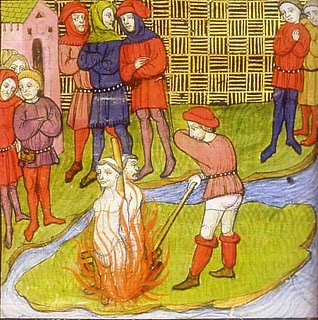
Today, I would like to advance again four heretical propositions, this time in relation to excessive pricing cases under Article 102 TFEU. In essence, they challenge the mainstream view that there are insuperable conceptual and practical hurdles to the control of dominant firms’ pricing policies. No doubt this will again trigger opposition from the mainstream.
A Proposed Theory of Harm for Excessive Pricing Cases, the Foreclosure of Ir-Relevant Markets – To start, I believe that there is a reasonably sound – and overlooked – conceptual basis to challenge monopolists’ excessive pricing policies on the basis of the antitrust rules. Take a monopolist charging excessive prices in market A (the relevant market). With this, the monopolist dries up demand on neighboring markets (B, C, D …). But this is not all. He also dries up a range of unrelated markets (W, X, Y, Z) which include virtually all the markets where customers make purchases of goods/services. To take one example of this, a customer faced with an increase in the price of oil will purchase lesser quantities of milk, cereals, fruits, etc. (assuming finite resources). The monopolist’s pricing policy on market A thus forecloses – possibly unwillingly – the sales opportunities of other producers on a range of ir-relevant markets. In turn, this may force out a number of firms of those markets, increase concentration, decrease entry opportunities and eventually harm market competition. This effect will be particularly acute on markets relating to products/services that do not fulfill basic needs, where customers will simply forego consumption.
But this is not all. With this conduct, the monopolist may even distort, and drive demand up in market A. This is because consumers foregoing consumption of B, C, D, W, X, Y, Z will divert their freed resources towards market A, thereby consuming more of the monopolist’s product (for instance, because they fear a further increase in the price of A). This may give rise to extra-superprofits on the part of the monopolist.
From an economic standpoint, there is nothing truly shocking to my proposition. After all, we know since Walras that markets work altogether in equilibrium. Moreover, it suggests that dominant firms’ excessive prices inflict a collateral damage on other firms which, in the word of economists, is akin to a negative externality. Hence, there is good ground to regulate such pricing practices. Finally, the emphasis of this proposed theory of harm is on foreclosure (and not on exploitation, thereby limiting the risks that agencies will seek to achieve distributional goals).
In practice, the upshot of this first proposition is that competition authorities, who often view markets as silos, should not shy away from thinking outside of the box relevant market. There is nothing wrong to consider the effects that price increases may have on other unrelated markets. After all, competition authorities do this all the time. Think for instance of the complexities involved in the balancing, under Article 101 TFEU, of the anticompetitive effects of an agreement in market 1 with its pro-competitive effects in market 2. Likewise, many theories of harm under Article 102 TFEU involve practices that take place in one market, and that have anticompetitive effects in another market (e.g., predatory pricing, tying, etc.).
A Proposed Practical Benchmark to Screen Excessive Pricing Cases – The most powerful argument against excessive pricing cases is practical in nature. No one, let alone antitrust regulators, can arguably say at what level a price (and a profit margin) becomes excessive. Moreover, price-costs benchmarks would be unpractical, because there would be insuperable cost-measurement problems in a number of areas (e.g. multi-products firms, etc.). Read the rest of this entry »
Overzealous antitrust enforcement in Spain?

A couple of days ago Nicolas wrote a post reporting the concerns expressed by some experts in relation to a possible enforcement gap in Italy in light of the fact that the Autoritá Garante has been mainly focusing on investigating unfair competition cases rather than on pursuing antitrust cases. Apparently, some of the lawyers who attended the conference at which Nicolas was present bemoaned these “dark times for antitrust in Italy”.
The situation in Italy, if true, appears to be in stark contrast to the one we have in Spain, where the Comisión Nacional de la Competencia is currently showing that it is one of the most overzealous enforcers in international antitrust.
In the past 18 months the CNC has initiated 70 formal investigations concerning all sorts of practices in a wide array of markets, and has adopted 20 fining decisions (click here for more details; I know there´s even an inside-joke at an american firm in Brussels which is based on spotting new investigations undertaken by the CNC). These numbers don’t include neither informal investigations nor proceedings initiated by regional competition authorities. Who said Spaniards aren’t productive?
From a strictly numerical point of view, these are clearly not at all dark times for antitrust in Spain. Indeed, there’s plenty of work for Spanish competition lawyers.
However, when looked at from a qualitative standpoint, the story seems a bit different (next week I´ll post a comment on the reasoning of the joke major decision adopted last week sanctioning electricity companies with 61 million euros and you´ll see what I mean). The CNC has skilled staff but pehaps their willingness to have on their plate more than what they can deal with is at the root of some questioable prioritization decisions and of some (too many) weak reasonings (which nevertheless generally withstand judicial review…)
The CNC must be credited for its very good job in bringing competition law issues to the forefront of the public debate, but it also needs to understand that Spanish over-enforcement is an undesirable and harmful to vigorous competition on the merits as the alleged Italian under-enforcement.
Are above-cost selective price cuts abusive? AG Mengozzi´s Opinion in Post Danmark (Case C-209/10)

Yesterday, Advocate General Mengozzi delivered an interesting Opinion in the Post Danmark v Konkurrenceradet case (C-209/10) (Not yet available in English).
This case has its origin on a preliminary reference submitted by the Danish Hojesteret which asks the ECJ whether it can be concluded that a dominant company which sets selectively low but non-predarory prices to be applied to three large customers of its main competitor can be held to have abused its dominant position when there is no evidence of any strategy aimed at excluding its competitor. The Danish Court also asked about the relevant additional elements that must be taken into consideration before concluding that selective above-cost pricing is illegal.
One of the main remarkable aspects of this Opinion is that it names Nicolas as authorized doctrine (this reflects the current level of antitrust doctrine.. ) 😉 But we´ll come back to that later.
Mengozzi´s Opinion is interesting in several respects. If you´re interested on a fairly detailed and hastily written identification of its highlights, click here to keep reading.
(Warning: as many cost-related discussions this one can be a bit tedious for some lawyers).
Rock and Law + The Legal Run

In the past few days we have posted stuff on Competition Parties, Competition Tourism , Fine Arts in Brussels and even on competition law manga. To complete this string of posts on competition law and leisure time we wanted to publicize and praise a couple of worthy initiatives undertaken by some law firms and in which a more than fair representation of competition lawyers (as well as a handful of readers of this blog) are participating:
The first one is “Rock and Law” a beneficial concert night which will take place in Madrid on the 16th of June with the participation of rock bands from Garrigues, Clifford Chance, Freshfields, Uría Menéndez, Ashurst, Cuatrecasas, Gómez Acebo &Pombo, CMS Albiñana, and Baker& McKenzie. Last year this event was a tremendous success, and I bet that this edition will top its predecessor.
Competition lawyers will be very well represented in Rock and Law with the band “The members of the Bar” (also called “The Whistleblowers” when under a different formation); two of their components , Carlos Vérgez and Enrique Carrera , are (apart from readers of this blog and good friends) almost as good with the guitar as they are with competition law (and I mean this as a compliment!)
The second initiative I was referring to is “The Legal run”, a fundraising activity organized by the Brussels in the framework of the Brussels 20 K, which will be taking place next Sunday. Although not necessarily registered through the Legal Run, a good bunch of competition lawyers will be taking part in this race (although fewer than expected; a number of ex-Howreys had reportedly been registered by the (ex)firm but their entries were subsequenlty withdrawn without notice. What are liquidators for if not for these things?). We´re willing to offer one of our already famous prizes to the fastest competition lawyer taking part in the race, so feel free to send us your times.
Awareness and Public Outreach Programmes

Public outreach programmes were a key topic on the agenda of the ICN annual conference in the Hague.
Those programmes seek to raise awareness of the general public (including firms) to the scope, content, institutions and penalties of competition rules. They are particularly important in countries with young antitrust regimes. They induce firms to comply spontaneously with the new rules.
But they are also relevant to any agency seeking to improve its detection efficiency. To take one example only, too many individuals still believe that price-fixing is not unlawful. Through education, awareness programmes may prompt stakeholders to report infringements (by lodging complaints and leniency applications, for instance).
Now CAs accross the world have been very inventive in crafting such programmes, often with the active support of the ICN. The leniency movie is now a standard in many competition law jurisdictions. DG COMP has recently posted on its website a funny flash module which illustrates the scope of competition policy. The Norwegian and Brazilian CAs have produced t-shirts with competition-friendly slogans (would love to get one of them. My size S or M).
Without the shadow of a doubt, however, the prize of the best public outreach device must be awarded to the Competition Commission of Singapore (CCS). On its website, the CCS makes available (for free) a MANGA on abuse of dominance (in English). Bravo!
I am just back from the Hague with 6 paperback copies. They will be awarded to my best students this semester.
PS: A great experience. I am truly indebted to the DG COMP for its kind invitation.
Competition Parties

We recently received invitations to a new breed of parties. On 4 May, Compass Lexecon was having its “Exclusive Spring Party” (with “drinks and canapés“). Two days later, Crowell & Moring held its “CroMo Party” at Tour and Taxis (with DJ BENNY…).
Unfortunately, I could not attend any of those parties.
Yet, a question arose: what drives business law firms and economic consultancies to organize such summer parties?
In the case of Compass Lexecon, the answer is straightforward. The firm sought to celebrate the launch of Compass Lexecon Europe, following the acquisition of LECG’s EU Competition Policy Group. This party was a classic reception, similar in nature to many other receptions.
The case of Crowell and Moring is more interesting. The flyer and dressing code (“colorful casual”) suggest that CroMo’s party was primarily targeted at young professionals (from Cromo and elsewhere) rather than at partners and clients. No information was provided on drinks, but I suspect they came for free. There was no special thing to celebrate.
So why organize a loss-making party of this kind? Initially, the following reasons came to mind: acquiring information on competing law firms, possibly with the help of liquid substances; increasing busy associates’ procreation rate; assuaging partners’ midlife crisis.
On second thoughts, however, I dismissed most of them in favour of a more conventional explanation which has to do with “branding”. It plays at several levels.
First, with the commoditization of the profession, legal services are increasingly fungible. Clients shop around and competition amongst law firms becomes brutal. To prevail over rivals, law firms seek to be perceived as special. For a number of years now, law firms have organized academic conferences to look bright. Now, they organize parties to look cool, hype and creative.
Second, as stressed by Alfonso a while ago, there is an increasingly pervasive perception amongst students that working in a business law firm is “not cool”. Being an associate in a business law firm involves long working hours, little freedom and virtually no space for leisure and family life. This has dramatic consequences on law firms’ hiring opportunities. And unlike in the 1980s and 1990s, financial compensation no longer does the trick. No wonder why some law firms seek to change their image amongst young lawyers, and arguably organize parties to that end.
Please note that we are interested by pictures, feedback and stories in connection with those parties.
Day off for EU Civil Servants
Felt like filing a merger today? Or having a call with a Commission official to discuss a case of common interest?
Unlikely to happen. Today is Europe day or in EU jargon, Schuman day. Most competition civil servants are off duty, chillin’.
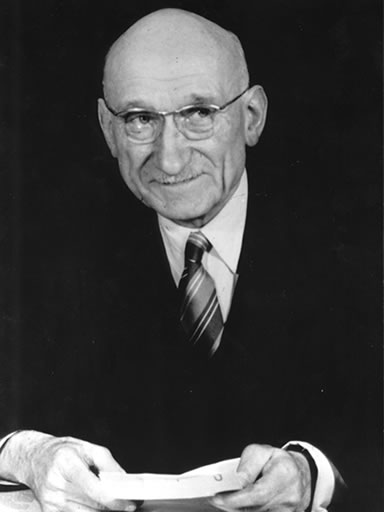
What the EU institutions celebrate today is the anniversary of the Schuman declaration of 9 May 1950. In this declaration, R. Schuman, the French Minister of Foreign Affairs (see above picture), invited the governments of France, Germany and other European countries to team up and build a federal state.
The celebration of this event triggers the following remark on my end: as it stands today, the EU is a direct emanation of the Schuman declaration. Yet, 61 years after, and with the exception of competition policy perhaps, we are still far from a federal state with some sort of political existence (nota: I am a convinced federalist). This is true both internally – ever heard anyone saying he was a EU citizen? – and externally – think of the EU’s invisibility in relation to Lybia.
In addition, I am pessimistic on the future, given the increased fragmentation dynamics at the domestic level (think of the nefarious state of Belgian politics) and the somewhat mechanical, ever-enlarging nature of the EU (think of Turkey’s accession demands, backed to a large extent by those who only conceive the EU as a shopping mall).
Subversive thoughts (1) – Fines, Leniency and the Search for an Optimal Detection Policy

A somewhat heretical idea sprung to mind yesterday. The mainstream will not like it (fortunately disputes with the mainstream are not any longer settled by recourse to bonfires).
(Note to our readers: the mainstream comprises adepts of Chicago School thinking and Public Choice theory. It combats, with caricatural arguments, all attempts to intensify competition enforcement. As if we were subject to Pavlovian conditioning, all too often we lawyers side with the mainstream, thereby failing to remember that competition enforcement is a genuinely good thing).
But let´s get back to this idea: to improve cartelists incentives to report infringements to agencies, why not allocate the entire amount of the fines (or a significant proportion thereof) to the whistle blower?
As long as the ring leader(s) is (are) excluded from a such reward, I see no obvious perverse effects to the proposal.
Surely, it sounds quite immoral to reward financially what is plain and simple betrayal. But on the other hand, it is fair and efficient that society rewards those firms that exhibit the strongest desire to comply with the law.
Also, one cannot rule out that clever firms involved in multiple cartels will coordinate leniency applications so that each participant benefits at least once from the reward (some sort of market sharing on leniency applications). Yet, this hypothesis rests on restrictive factual assumptions. More importantly, given that the fine will likely change from one cartel to the other, cartelists will not withdraw equal benefits from leniency applications. In turn, this will undermine their incentives to join/observe the coordination.
Finally, some could be warry for the EU budget to which competition fines contribute. Again, the objection is not decisive. This is because competition fines do not increase the EU budget but finance it. Technically, they are deducted from MS contributions, who pay less when competition fines are high. The sole and whole issue there is thus distributional: shall we transfer the product of fines from MS to whistle blowers? I am not sure of the answer, but I am incline to believe that competition fines are just a drop in the sea of MS contributions.
Those thoughts came yesterday whilst I was preparing a lecture on public and private enforcement for the LL.M students of the University of Gent (see ppt. below). I am very grateful to Prof. Govaere for her kind invitation.
5 May 2011 – Public and Private Enforcement of Competition Law
Chillin´Competition Group on LinkedIn

We are that close to becoming IT geeks.
We have just created a Chillin´Competition group on LinkedIn! (you can click here to join it). The above picture is the group´s image.
In addition to the existing CompetitionProf Twitter account (see sidebar on this page), this will improve the ability of our readers/friends to meet and interact with us/each other.
This blog currently has more than 3000 visits a week, but we can only put a face to the people that contact us by email and to the 75 readers who have so far suscribed to the blog (by the way, in case you haven´t noticed, there is a “Suscribe” link on the right side of the screen). We also hope that by having a little more information on who you are, we will be able to improve the contents of this blog with “more targeted” posts. In turn, this will entitle us to obliterate our competitors chill competition even further.
Looking forward to linking up with you there
Nicolas & Alfonso


